

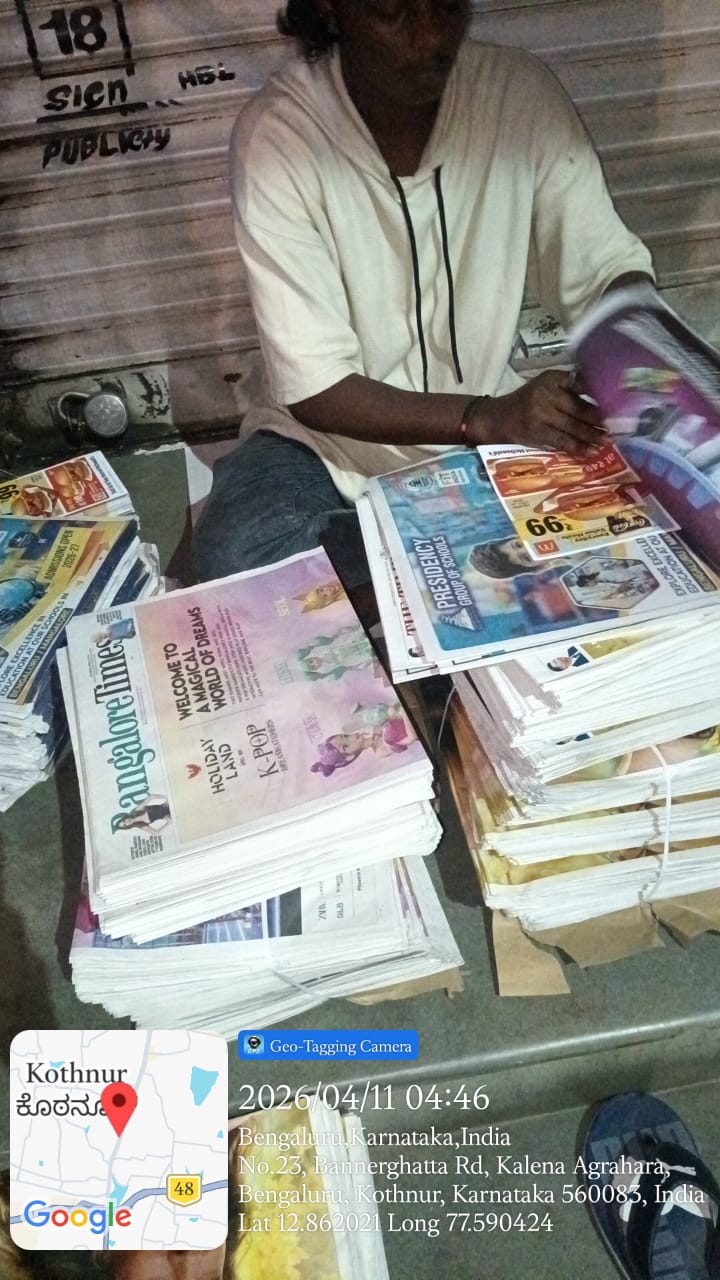
Newspaper insertion in Ahmedabad is the most vernacular-concentrated market in urban India. Gujarati dailies carry 78 percent of total newspaper readership in the city, the highest single-language concentration of any Indian metro. Gujarat Samachar alone reaches 35.2 lakh average issue readers per IRS Q1 2026 data, more than every English daily in Ahmedabad combined by a factor of 4. Any 2026 Ahmedabad campaign that allocates more than 30 percent of media spend to English dailies is structurally over-paying for the wrong reader. This guide unpacks the Gujarati ecosystem and the rate map that follows from it.
Ahmedabad's newspaper landscape
Six dailies carry roughly 94 percent of Ahmedabad's newspaper readership. Three Gujarati dailies dominate. Gujarat Samachar (Gujarati, morning) at 35.2 lakh average issue readership. Sandesh (Gujarati, morning) at 18.6 lakh. Divya Bhaskar Ahmedabad (Gujarati, morning) at 14.8 lakh. The three Gujarati dailies together reach roughly 68 lakh readers daily, the deepest concentration of vernacular newspaper readership in any Indian metro.
Three English dailies serve specific segments. Times of India Ahmedabad at 6.4 lakh covers corporate, IT-corridor, and HNI readers. Indian Express Ahmedabad at 2.1 lakh skews to professionals and the legal-financial community. DNA Ahmedabad at 1.8 lakh skews younger and corporate-housing residents. The three English dailies together reach roughly 10 lakh readers, one-seventh of the Gujarati daily reach.
Operational implication: any Ahmedabad campaign that goes English-only undershoots reach by roughly 75 percent. The Ahmedabad market has the most lopsided language-versus-reach ratio of any Indian metro. Even brands that intuitively feel English-targeting because the customer is a Bodakdev IT professional should run a Gujarati-plus-English mix because the IT professional reads Gujarat Samachar with his morning coffee even when he reads TOI in his office at noon. The right mix in Ahmedabad is almost always 65 to 80 percent Gujarati, with English serving as the supplement rather than the spine.
What drives Ahmedabad's three insertion rate zones?
Zone A: SG Highway-Bodakdev-Vastrapur premium (pincodes 380054, 380015, 380058, 380009 west)
Bodakdev (380054), Vastrapur (380015), Satellite (380015), Thaltej (380054), Bopal (380058), Prahlad Nagar, the western half of Navrangpura. Per-piece rates run 18 to 22 percent above the city average. ₹1.48 for A5, ₹1.85 for A4, ₹2.30 for A2 on standard paper. The premium reflects HNI density (Gujarat industrial business owners, IT corridor professionals, Bodakdev family offices) and lower distribution density (larger plot sizes, more bungalows, fewer households per route kilometre). For luxury automotive, premium real estate, jewellery, and finance, this zone delivers 3 to 5 times the response per rupee of mass-market alternatives.
Zone B: CG Road-Navrangpura commercial belt (pincodes 380006, 380007, 380009 east, 380013)
CG Road retail and office corridor, Navrangpura, Ellis Bridge, Paldi, Naranpura, Sabarmati Riverfront commercial belt. Per-piece rates track the city average within 3 to 5 percent. ₹1.28 for A5, ₹1.58 for A4, ₹2.00 for A2. The corridor's distinctive feature is the traditional Gujarati commercial household: family-business owners, multi-generation Gujarati families, household decisions driven by women readers of Gujarat Samachar Sunday Ravipurti and Sandesh weekend supplements. For retail, household goods, school admissions, family healthcare, and gold or wedding jewellery, this zone is Ahmedabad's economic centre and the right primary target for most non-luxury campaigns.
Zone C: Maninagar-Paldi-Naranpura mass-market and outer suburbs (pincodes 380008, 380014, 380019, 380024)
Maninagar (380008), Asarwa, Saraspur, Khadia (Old City Hindu-commercial), plus Naranpura, Ranip, Sabarmati outer, Chandkheda, Gota. Per-piece rates run 8 to 12 percent below the city average. ₹1.15 for A5, ₹1.42 for A4, ₹1.80 for A2. The discount reflects high household density (older neighbourhoods, smaller plots, more flats per route), Sandesh and Divya Bhaskar over-indexing versus Gujarat Samachar, and the mass-market Gujarati family-decision dynamic. For FMCG, school admissions, household appliances, two-wheeler launches, and entry-level retail, this zone delivers Ahmedabad's best CPM by a clear margin.
Ahmedabad's three insertion rate zones (2026)
| A5 rate | A4 rate | A2 rate | Best for | |
|---|---|---|---|---|
| Zone A: SG Highway-Bodakdev-Vastrapur | ₹1.48 | ₹1.85 | ₹2.30 | Luxury auto, premium real estate, jewellery, finance |
| Zone B: CG Road-Navrangpura commercial belt | ₹1.28 | ₹1.58 | ₹2.00 | Retail, household goods, admissions, family healthcare |
| Zone C: Maninagar-Paldi-outer suburbs | ₹1.15 | ₹1.42 | ₹1.80 | FMCG, appliances, two-wheeler launches, entry-level retail |
Per-piece rates on standard paper; ward-level targeting adds ₹0.16-0.28 per piece over pincode-level.
The SG-Highway-to-Maninagar arc, pincode by pincode
The corridor from Bodakdev through CG Road to Maninagar carries roughly 65 percent of Ahmedabad newspaper insertion volume because the corridor combines geographic continuity with sharp household-income gradient over short distances. The Mediaverse 2026 rate map for the arc reads as follows. Bodakdev (380054): ₹1.50 A5, ₹1.85 A4. Thaltej (380054): ₹1.48 A5, ₹1.82 A4. Vastrapur (380015): ₹1.45 A5, ₹1.80 A4. Satellite (380015): ₹1.42 A5, ₹1.78 A4. Navrangpura west (380009): ₹1.38 A5, ₹1.72 A4. Navrangpura east (380009): ₹1.30 A5, ₹1.62 A4. CG Road retail (380006): ₹1.30 A5, ₹1.60 A4. Paldi (380007): ₹1.25 A5, ₹1.55 A4. Ellis Bridge (380006): ₹1.28 A5, ₹1.58 A4. Maninagar (380008): ₹1.15 A5, ₹1.42 A4. The arc shows a 30 percent rate spread between its premium end (Bodakdev) and its mass-market end (Maninagar) across roughly 12 kilometres, the sharpest income gradient of any Indian metro arc.
Operationally, the arc has one quirk worth knowing. The 380009 Navrangpura pincode is functionally two separate distribution zones split by CG Road: the western half toward Vastrapur skews HNI and English-plus-Divya-Bhaskar; the eastern half toward Mithakhali skews mid-income and Gujarat-Samachar-plus-Sandesh. A brief that says 380009 without specifying east or west receives a blended distribution that overpays for either targeting brief. Vendors who work the Ahmedabad market well will accept the east-west split without complaint; those who push back are working from generic Indian metro templates.
AMC compliance and the dry-state regulatory context
Ahmedabad's distribution architecture maps to the 64 AMC wards across 6 zones (North, South, East, West, Central, New West). Pincode targeting works at finer granularity than other Indian metros because Ahmedabad pincodes are smaller and more numerous per ward. Ward-level targeting adds ₹0.16 to ₹0.28 per piece over pincode-level. The two are close enough that most campaigns can use pincode-level safely.
Three compliance points apply to inserted artwork. First, Gujarat is a dry state under the Gujarat Prohibition Act 1949. Zero alcohol-related artwork passes AMC pre-screening, including indirect references like cocktail pairings, beer-and-snack combinations, party-themed messaging that implies alcohol, or restaurant menus listing alcoholic beverages. Out-of-state brands frequently get pulled-after-print on artwork they ran successfully in Mumbai or Delhi, which is why bilingual Gujarati pre-screening matters. Second, no political content within 14 days of any election under SEC Gujarat jurisdiction. Third, dietary claims (especially vegetarian-only positioning for restaurants) require ASCI-compliant evidence because Ahmedabad has the highest vegetarian-population concentration in urban India and false vegetarian claims are flagged faster than in other metros.
The Gujarati-language vendor ecosystem
Ahmedabad newspaper insertion runs through three vendor types. The newspaper agencies themselves handle direct booking. Gujarat Samachar group handles Gujarat Samachar and the Ravipurti supplement. Sandesh group handles Sandesh. DB Corp handles Divya Bhaskar. Times Internet handles TOI Ahmedabad. These direct channels rarely offer multi-daily discounts but offer the best per-daily rate if you only need one paper.
The Ahmedabad metro insertion specialists are the second category. They bundle multi-daily Gujarati plus English campaigns, handle day-of-week and edition-specific targeting, and translate briefs into Gujarati for the pre-screening process. The Mediaverse falls into this category. Multi-daily campaigns above ₹50,000 typically save 8 to 14 percent through specialist booking versus direct-to-newspaper booking, and the Gujarati pre-screening rigor avoids the dry-state and dietary-claim rejection patterns that out-of-state brands run into.
The third vendor type is the printer-distributor combine, often a Naroda or Vatva industrial-area facility that handles both printing and distribution. They quote the cheapest per-piece rate but rarely offer the Gujarati translation rigor, reconciliation reports, or proof-of-distribution documentation that serious campaigns demand. The language-and-dietary regulatory specificity of Ahmedabad means first-time advertisers should go through a metro specialist rather than the cheapest-vendor option.
Navratri: the city's commercial peak
Navratri (September-October, nine-night cycle) is Ahmedabad's economic peak. Unlike most Indian metros where Diwali is the spend window, in Gujarat Navratri drives more discretionary spending: clothing, jewellery, accessories, food, beauty, salon services, and event venues all see 2 to 3 times the non-Navratri response rates. Newspaper circulation climbs 25 to 35 percent during Navratri weeks. Insertion rates climb 25 to 35 percent in parallel. The Mediaverse field data across 22 Navratri campaigns shows redemption rates climb 2.2 to 3.1 times over non-Navratri windows for retail, clothing, jewellery, and packaged food categories.
The premium pays for itself for any Navratri-relevant category. Avoid Navratri-window insertions for B2B, automotive, finance, and industrial categories because reader attention is on festival content rather than commercial decisions. Time those campaigns to August (pre-Navratri) or November (post-Navratri Diwali aftermath) for cleaner economics. The post-Navratri November window specifically captures the deferred-decision spending from households that researched but did not buy during the festival itself, a pattern roughly 30 percent of Ahmedabad respondents reported in The Mediaverse 2025 consumer survey.
A 2026 Ahmedabad campaign launch playbook
Walk through a real campaign brief. A premium ethnic-wear retailer launching a flagship store on CG Road. ₹4 lakh all-in budget. Target audience: 25 to 50 year old Gujarati women and family-decision-maker households across Navrangpura, Vastrapur, Satellite, Paldi, and Bodakdev. Goal: store walk-ins in the launch fortnight running into Navratri, with a secondary KPI of garba-event partnership signups.
Step 1, working budget. ₹4,00,000 minus 18 percent GST = ₹3,38,983 ex-GST. Reserve ₹25,000 for design and Gujarati artwork preparation (including text-fit for Gujarati script which expands roughly 12 to 18 percent versus English in the same content). Reserve ₹45,000 for printing setup and proof-of-distribution. Working budget for media: ₹2,68,983.
Step 2, edition mix. Target audience reads Gujarat Samachar plus Divya Bhaskar at near-equal rates in the SG Highway corridor, with Gujarat Samachar dominating in CG Road and east. TOI Ahmedabad adds incremental English-reading HNI reach. Mix: Gujarat Samachar 55 percent of media spend, Divya Bhaskar 25 percent, TOI Ahmedabad 20 percent.
Step 3, pincode targeting. Navrangpura west (380009), Vastrapur (380015), Satellite (380015), Bodakdev (380054), Paldi (380007). Five pincodes, total target households roughly 2.6 lakh.
Step 4, campaign cadence. Two waves: launch Sunday Gujarat Samachar with the Ravipurti pull-out (women-targeted, highest engagement for ethnic-wear category), then a Saturday Divya Bhaskar plus Sunday TOI combo for second-impression frequency in week two. A4 size, 90 GSM, Gujarati primary with English secondary, double-sided, no fold.
Step 5, volume math. ₹1,47,941 for Sunday Gujarat Samachar Ravipurti across SG-Highway pincodes at ₹1.55 average per piece (Sunday surcharge included): roughly 95,400 pieces. ₹67,246 for Saturday Divya Bhaskar at ₹1.60 per piece: roughly 42,000 pieces. ₹53,796 for Sunday TOI at ₹1.92 per piece: roughly 28,000 pieces. Total: 165,400 pieces across two weeks. With 2.5 readers-per-copy in Gujarati daily readership and 2.7 in English daily readership, total reader exposure ~4.2 lakh impressions including frequency overlap.
Step 6, attribution. Print a unique missed-call number on the flyer, a unique discount code valid only on launch fortnight redemptions, and a Gujarati-language QR code routing to a separate landing page so that Gujarati-daily-driven response can be measured separately from English. Gujarati QR-scan rate runs roughly 2.4 to 2.8 times the English QR-scan rate in the ethnic-wear category, so the separate tracking matters more in Ahmedabad than in other metros.
What separates an Ahmedabad campaign that works from one that does not
Three disciplines explain almost all the variance. First, Gujarati-primary mixing rather than English-led concentration. The 78 percent Gujarati readership concentration means English-led campaigns leave 75 percent of relevant reach uncaptured. Second, dry-state pre-screening discipline: every artwork must pass the Gujarati Prohibition Act test, the vegetarian-claim ASCI test, and the AMC zonal officer review. Third, season-aware scheduling: time festival-relevant categories to Navratri-Sashtri week, time B2B and finance categories to August or November to avoid the festival-attention overpay. Brands that practice these three disciplines see 2 to 3 times the per-rupee response of brands that treat Ahmedabad as a generic Indian metro.
Bottom line
Pick your zone first (SG-Highway HNI, CG-Road commercial, or Maninagar mass-market). Pick your edition mix second, weighted 65 to 80 percent Gujarati for almost every category. Pick your pincodes third, splitting 380009 and 380015 into their east-west halves where it matters. Time the campaign to or away from Navratri based on whether your category competes for festival wallet. Pre-screen artwork for dry-state and dietary compliance before printing. With these five disciplines, your Ahmedabad newspaper insertion campaign will outperform the same budget spent on any single digital channel for retail, real estate, and direct-response objectives by 2 to 4 times on landed cost-per-walk-in.
Should I run a Gujarati-only newspaper insertion campaign in Ahmedabad?
For mass-market retail, FMCG, school admissions, household appliances, and family-decision categories targeting the Gujarati commercial household, a Gujarati-only campaign captures 95 to 98 percent of the relevant reach at the cleanest per-rupee cost. For B2B SaaS, EdTech, premium real estate, finance, and any campaign targeting the SG Highway IT corridor specifically, a Gujarati-primary plus English-supplement mix (roughly 70-30 ratio) outperforms a Gujarati-only campaign. English-only campaigns are almost never the right choice in Ahmedabad regardless of target audience.
How does the GIFT City corridor compare to standard Ahmedabad newspaper insertion?
GIFT City (Gandhinagar district, technically outside AMC) operates on a separate distribution sub-network anchored in Gandhinagar Municipal Corporation. Most Ahmedabad newspaper insertion vendors do not directly cover GIFT City; for that audience you need either a Gandhinagar-based vendor or a multi-municipal-corporation contract. Rates run 15 to 20 percent above standard Ahmedabad pincodes because of the lower household density and the corporate-tenant composition. GIFT City is the right targeting for financial services, fintech, and the international corporate audience, but it should be specified as a separate brief rather than bundled with Ahmedabad.
What is the smallest Ahmedabad newspaper insertion campaign that still has good economics?
5,000 pieces in a single pincode through a single Gujarati daily is the practical floor. Below that, the per-piece rate climbs above ₹2.00 because the printer's plate-setup cost and the agent's beat-list-routing cost stop spreading across enough volume. For pilots below 5,000 pieces, the Mediaverse recommends auto rickshaw branding in the same pincode at ₹150 per auto per month for back-panel branding, which typically outperforms a tiny newspaper insertion campaign on landed CPM. Above 5,000 pieces in an Ahmedabad pincode, insertion is the clear winner.
Looking for professional Newspaper Insertion services?
The Mediaverse runs end-to-end newspaper insertion campaigns across India with geo-tagged delivery and transparent, all-inclusive pricing.
Explore our Newspaper Insertion solutionsSummarize this guide with AI
Open this article in your favourite AI assistant
Related Guides
Written by

The Mediaverse Team
India's Leading Outdoor Advertising Agency
The Mediaverse is a national-level outdoor advertising and integrated marketing organization that provides complete OOH, ATL, BTL, retail, and transit media solutions across India. With years of experience executing high-performance campaigns for brands in FMCG, Real Estate, E-commerce, EdTech, Automotive, Healthcare, and Retail, The Mediaverse combines creativity, data-driven media planning, and flawless on-ground execution. As a full-stack outdoor advertising provider, The Mediaverse offers Auto Branding, Mobile Van Branding, Newspaper Insertion Advertising, Shop Name Board Branding, In-Store Branding, Hoardings, Transit Media, Kiosks, Mall Media, Activations, and all forms of Below-The-Line marketing. Known for its pan-India network, strategic route planning, premium print quality, and Cheqmate™ GPS-based verification, The Mediaverse ensures 100% transparent and result-oriented campaign delivery. The Mediaverse’s editorial team produces deeply researched, SEO-optimized, and generative-engine-friendly content to help businesses understand the power of outdoor advertising and make informed decisions that maximize brand visibility and ROI across urban, suburban, and rural markets.
Related Articles
How to plan a newspaper insertion campaign in India: the 2026 step-by-step guide
What does newspaper insertion cost, how precise is the targeting, and how do you run a campaign? The complete 2026 guide to newspaper insertion in India, from pincode targeting to measurement.
Print inserts or digital ads for a local business: the 2026 budget-split decision guide
Is newspaper insertion still worth it against digital ads in 2026? A decision guide with a spec table, when each wins, how to combine them, and a checklist for local businesses.
Pincode targeting for newspaper insertion across India: the 2026 multi-city playbook
How do you put your flyer into just the right neighbourhoods? A 2026 playbook for pincode-targeted newspaper insertion: costs, a targeting-levels table, a 7-step method, and how to measure response.