

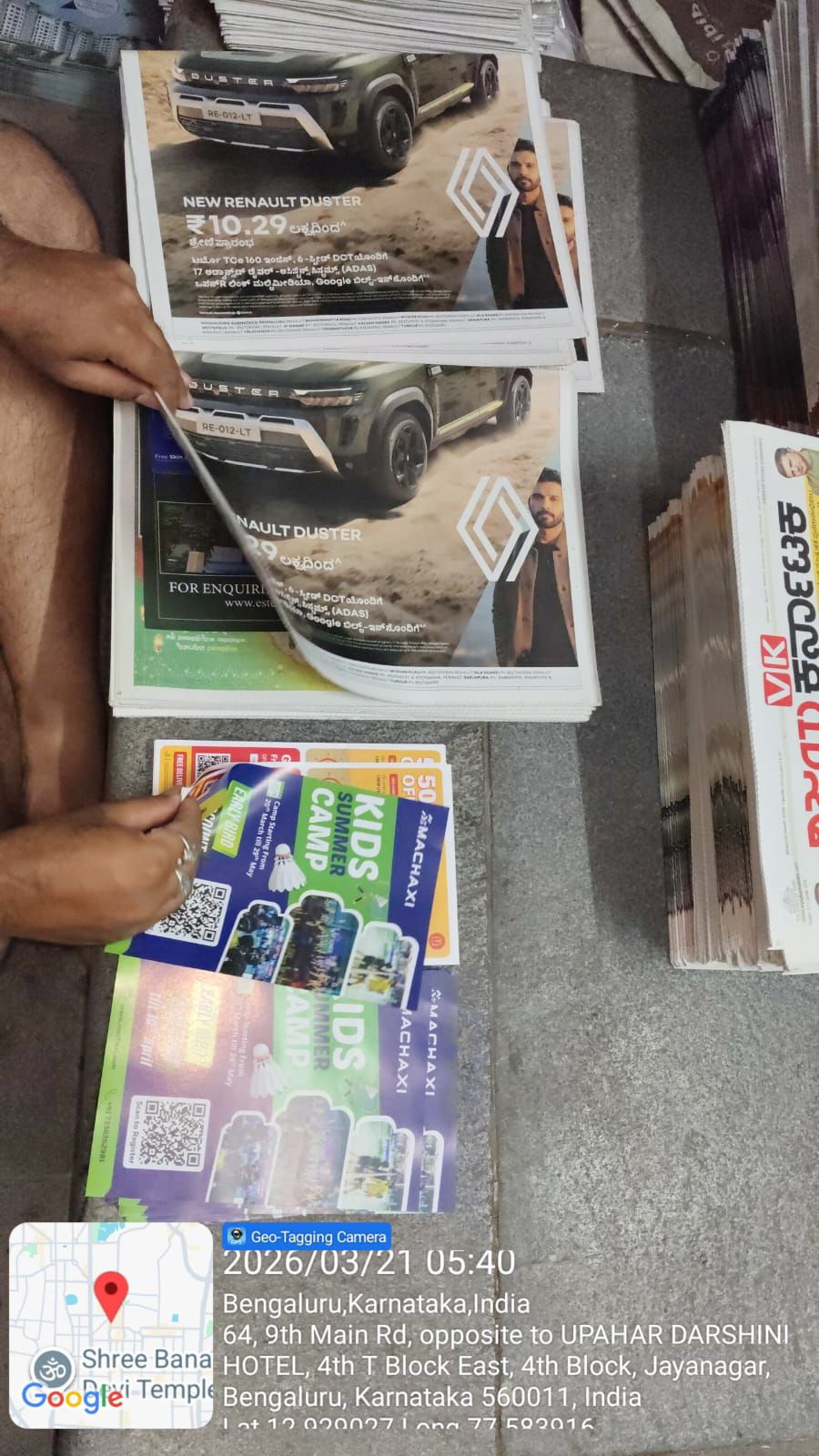
What does paper insertion actually mean, and what do all the surrounding terms refer to? If you have ever opened a newspaper insertion quote and seen RO, FCT, IOC, dropout, reconciliation, and edition rate inside the same paragraph, you have run into the working vocabulary of an industry that has not been particularly kind to first-time advertisers. This glossary fixes that. 32 terms, plain English, in the order they typically appear on a quote.
The core meaning, before the jargon
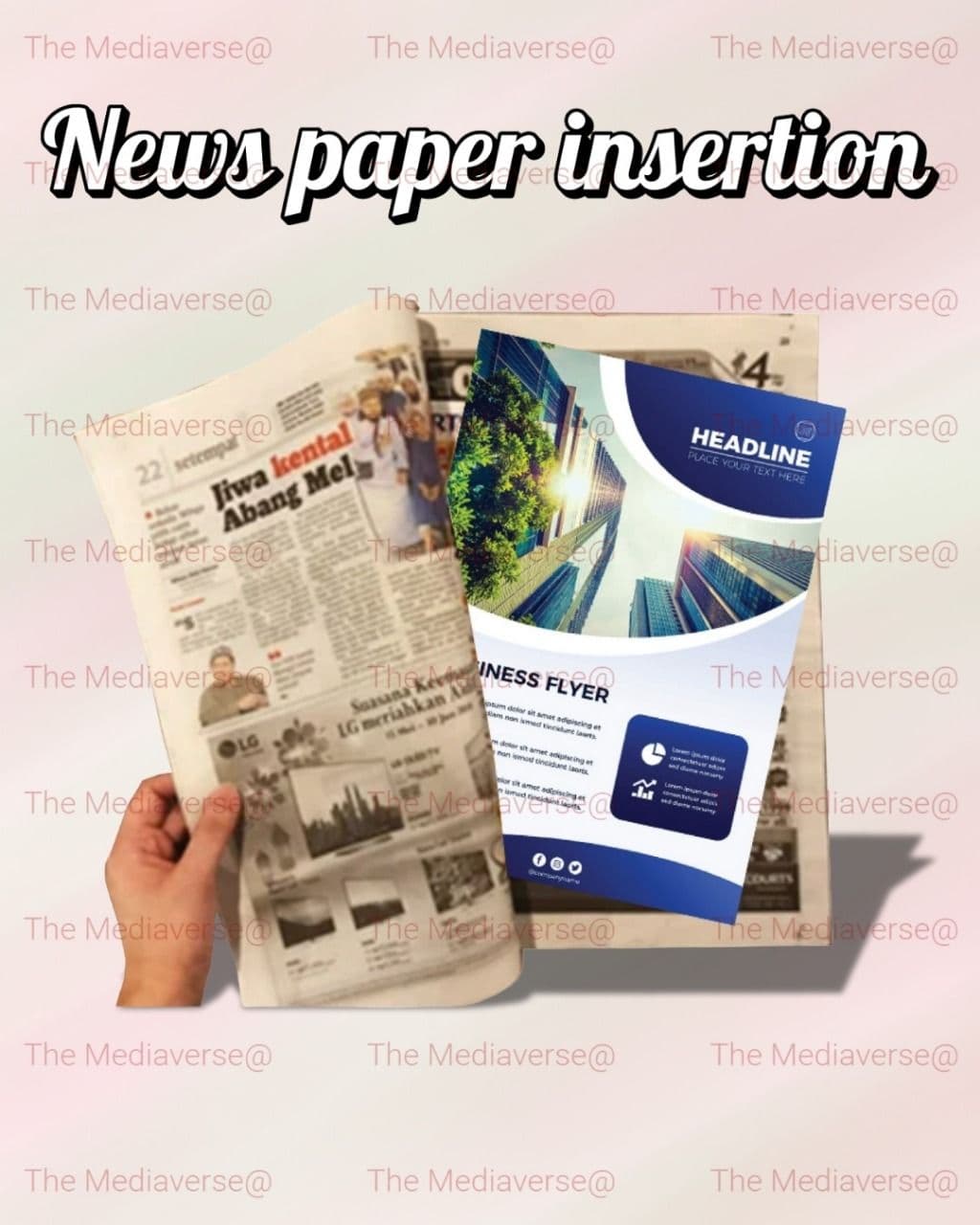
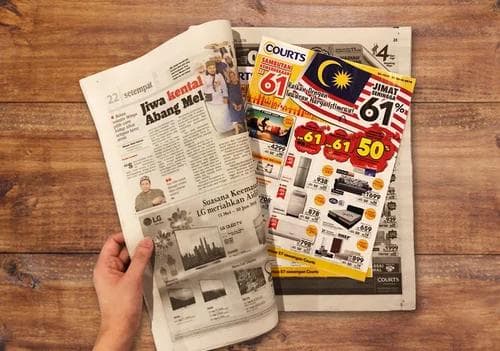
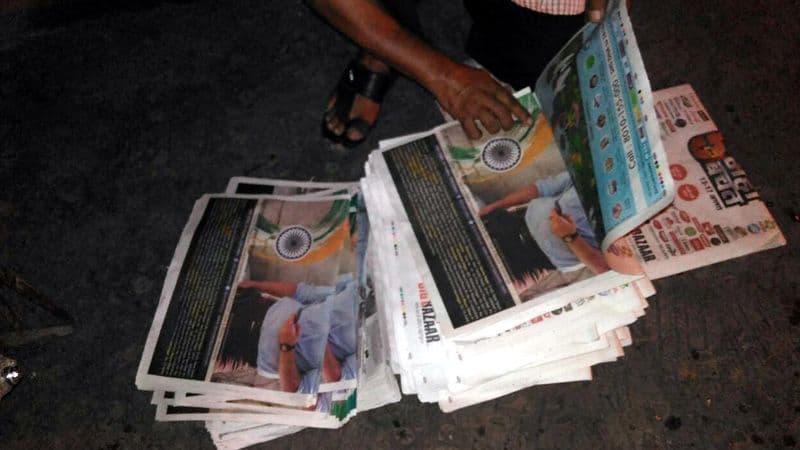
Paper insertion is the practice of physically placing a printed flyer or leaflet inside the folds of a newspaper before delivery, so the insert reaches the same household that receives the paper. The insert travels with the paper, is uncovered when the reader opens the paper at home, and is treated as the reader's property once delivered. Critically, the insert is a separate piece of paper, not part of the newspaper's editorial or display-advertising pages. Insertion is sometimes called drop-in advertising, dropper, or pamphlet drop, depending on the region and vendor.
Why this matters for an advertiser: insertion buys reach into a household at the moment of highest attention (morning paper, breakfast table, low ad-blocker presence), at a per-piece cost dramatically lower than display ads in the same paper. The trade-off is share of voice. The display ad is part of the page whether or not the reader handles it. The insertion lands physically in the reader's hands, but only if it survives the bundling, transport, and delivery chain.
32 terms, in alphabetical groups
A to G
ABC: Audit Bureau of Circulations, the body that audits and publishes verified newspaper circulation numbers. ABC-certified circulation is the trustworthy reach number for media planning. Beat list: the door-by-door delivery route assigned to a newspaper agent. Pincode targeting works by selecting beat lists rather than postal codes directly. Bundle: a tied stack of newspapers (typically 25 or 50 papers) that distribution agents handle as one unit. Insert weight matters because too-heavy inserts break the bundle. CPM (Cost per Mille): cost per thousand impressions or readers. Newspaper insertion CPM in 2026 ranges from ₹5 to ₹20 depending on city and edition. Dropout: the percentage of inserts that detach from the newspaper between bundling and reader hands. Premium printing and folding reduces dropout from 8 to 12 percent down to 3 to 5 percent. Edition: a specific dated print run of a newspaper. Each city has separate editions; targeting Bangalore TOI is different from targeting all-India TOI. Edition rate: the per-piece rate for insertion in one specific edition. FCT (Full Colour Tabloid): trade abbreviation for a full-colour insert printed on tabloid-sized paper, distinct from the half-colour or single-colour cheaper alternatives. GSM (grams per square metre): paper weight. 80 to 90 GSM is offset standard; 130 GSM is art-paper premium; 170 GSM is the maximum without special handling fees.
H to P
Hand-insertion: manual placement of inserts into newspapers by distribution agents, used for low-volume or premium campaigns. Distinct from machine insertion. IOC (Insertion Order Confirmation): some vendors use IOC instead of RO. Same meaning. Insertion charges: the per-piece cost of placing the insert into the newspaper, distinct from printing charges and distribution charges. Some vendors bundle these three; some itemise. Always demand itemised on quotes above ₹50,000. Letterbox-friendly: a format and weight specification ensuring the insert fits standard apartment letterboxes (typically under 30 cm in any dimension and under 12 grams per piece). Machine insertion: automated placement of inserts during the newspaper's main printing run, used for volumes above 50,000 pieces in metros. Lower per-piece labour cost than hand-insertion. Masthead: the top section of a newspaper containing the title and date; insertion never touches the masthead, but media plans use masthead-adjacent positioning as a quality marker for reach. PO (Purchase Order): some agencies use PO instead of RO. Same meaning. Pincode targeting: distribution restricted to specific postal pincodes within a city, achieved by selecting matching beat lists. Pre-bundled: inserts placed into newspapers before the main bundling step at the printing facility, the most common method in 2026.
Q to Z
Reach: the unique household count that receives the insert. Calculated as circulation count multiplied by readers-per-copy (typically 2.0 to 2.8 in metros, 2.4 to 3.5 in tier-2). Reconciliation report: the post-campaign document showing pincode-wise distributed quantity versus quoted quantity, with explanations for any shortfall. Mandatory deliverable for campaigns above 25,000 pieces. Release Order (RO): the formal booking confirmation issued by an agency or vendor; specifies edition, date, quantity, zones, and rate. Without an RO, the booking is not confirmed. Slot rate: the rate for an insertion booked into a specific slot (e.g., centerfold-adjacent versus general). Slot rates are 5 to 12 percent above the base edition rate. Spread: the portion of the newspaper across which the bundle of inserts is distributed; relevant to newspapers with multiple pull-out sections. Tear sheet: a sample of the printed newspaper showing the inserted flyer, mailed or photographed for proof-of-execution. Standard for above-INR-1-lakh campaigns. UPC (Unique Promo Code): a unique discount code printed on the insert that lets the brand attribute walk-ins or orders to specific editions, zones, or campaign waves. Wastage: pieces lost between printer and final delivery; should be under 2 percent for premium vendors and is built into the quoted volume.
Abbreviation cheat sheet
Eight abbreviations carry roughly 90 percent of the working jargon. RO = Release Order. PO = Purchase Order. IOC = Insertion Order Confirmation (synonyms for RO). FCT = Full Colour Tabloid. GSM = Grams per Square Metre. ABC = Audit Bureau of Circulations. CPM = Cost per Mille (per thousand). UPC = Unique Promo Code. Memorise these eight and roughly 90 percent of the inbound vendor jargon decodes itself. The remaining 10 percent is regional dialect (Bangalore agents say drop while Mumbai agents say pre-bundle for the same operation), which the glossary above covers.
Common misuse traps
1. Confusing circulation with reach
Circulation is the number of physical papers printed and distributed. Reach is the number of unique people who read those papers. A TOI Bangalore Sunday edition with 4 lakh circulation typically reaches 9 to 11 lakh readers because each paper is read by 2.2 to 2.8 people. Vendors quoting on circulation undersell reach; vendors quoting on reach without ABC backing are inflating numbers. Always confirm whether the quote is circulation-based or reach-based.
2. Insertion vs advertorial vs display ad
An insertion is a separate paper inside the newspaper. An advertorial is a paid editorial-style article printed inside the newspaper. A display ad is a graphic advertisement printed inside the newspaper. The three formats price differently (insertion is the cheapest per-impression, display ad is the most expensive per-impression). Some agency reps use the three terms loosely; in any quote, demand which of the three the proposal covers, since the per-piece economics differ by 10 to 50 times.
Insertion vs advertorial vs display ad
| What it is | Cost per impression | |
|---|---|---|
| Insertion | Separate printed piece placed inside the paper | Lowest (CPM ₹5-20) |
| Advertorial | Paid editorial-style article printed on the page | Mid |
| Display ad | Graphic advertisement printed on the newspaper page | Highest (10-50x insertion) |
Demand which of the three a proposal covers; the per-piece economics differ by 10 to 50 times.
3. Per-piece vs per-1000 quoting
Most Indian insertion quotes are per-piece in 2026. Some legacy vendors still quote per-1000-pieces (a remnant of older media-planning tradition imported from Western markets). The two are easy to confuse. ₹1.50 per piece is ₹1,500 per 1,000 pieces. ₹1,500 per 1,000 pieces is ₹1.50 per piece. Always confirm the unit of pricing in writing on the RO.
Reading your first quote
With the glossary above, your first newspaper insertion quote should now decode cleanly. Check the rate basis (per-piece, GSM, edition, sides). Check the booking confirmation type (RO, PO, or IOC). Check the deliverables (tear sheet, reconciliation report, dropout guarantee). Check the unit (₹ per piece, not per thousand). With those four confirmations in writing, you have a quote you can hold the vendor accountable to. Without them, you have a brochure with a number on it.
Is paper insertion the same as newspaper advertising?
Newspaper advertising is a broader category that includes display ads, classifieds, advertorials, and insertions. Paper insertion is one specific format within newspaper advertising, distinguished by being a physical insert rather than printed copy on the newspaper page. Insertion has the lowest cost-per-impression of the four but the lowest share-of-voice; display ads have the highest share-of-voice and the highest cost-per-impression.
Why do different vendors use different abbreviations for the same thing?
Indian newspaper insertion grew up across regional vendors with different agency lineages, leading to genuinely different vocabulary. RO came in via the metro English-daily ecosystem. PO is the cleaner term used by national agencies that import from Western media-planning vocabulary. IOC is a Tier-2 city term that emerged in 2010s to disambiguate. All three are functionally identical. Standardising one term in your contract avoids cross-vendor confusion mid-campaign.
What is the difference between insertion charges and distribution charges on my invoice?
Insertion charges cover the act of placing the printed flyer inside the newspaper (typically labour and machine cost). Distribution charges cover the newspaper's normal door-to-door delivery, which is paid by the newspaper's subscribers, not by the advertiser. Some vendor invoices show distribution charges as a separate line item billed to the advertiser, which is incorrect and indicates either an unbundled-by-mistake quote or an attempt to double-charge. Push back on any quote that bills distribution charges to the advertiser separately from insertion charges.
Looking for professional Newspaper Insertion services?
The Mediaverse runs end-to-end newspaper insertion campaigns across India with geo-tagged delivery and transparent, all-inclusive pricing.
Explore our Newspaper Insertion solutionsSummarize this guide with AI
Open this article in your favourite AI assistant
Related Guides
Written by

The Mediaverse Team
India's Leading Outdoor Advertising Agency
The Mediaverse is a national-level outdoor advertising and integrated marketing organization that provides complete OOH, ATL, BTL, retail, and transit media solutions across India. With years of experience executing high-performance campaigns for brands in FMCG, Real Estate, E-commerce, EdTech, Automotive, Healthcare, and Retail, The Mediaverse combines creativity, data-driven media planning, and flawless on-ground execution. As a full-stack outdoor advertising provider, The Mediaverse offers Auto Branding, Mobile Van Branding, Newspaper Insertion Advertising, Shop Name Board Branding, In-Store Branding, Hoardings, Transit Media, Kiosks, Mall Media, Activations, and all forms of Below-The-Line marketing. Known for its pan-India network, strategic route planning, premium print quality, and Cheqmate™ GPS-based verification, The Mediaverse ensures 100% transparent and result-oriented campaign delivery. The Mediaverse’s editorial team produces deeply researched, SEO-optimized, and generative-engine-friendly content to help businesses understand the power of outdoor advertising and make informed decisions that maximize brand visibility and ROI across urban, suburban, and rural markets.
Related Articles
How to plan a newspaper insertion campaign in India: the 2026 step-by-step guide
What does newspaper insertion cost, how precise is the targeting, and how do you run a campaign? The complete 2026 guide to newspaper insertion in India, from pincode targeting to measurement.
Print inserts or digital ads for a local business: the 2026 budget-split decision guide
Is newspaper insertion still worth it against digital ads in 2026? A decision guide with a spec table, when each wins, how to combine them, and a checklist for local businesses.
Pincode targeting for newspaper insertion across India: the 2026 multi-city playbook
How do you put your flyer into just the right neighbourhoods? A 2026 playbook for pincode-targeted newspaper insertion: costs, a targeting-levels table, a 7-step method, and how to measure response.