

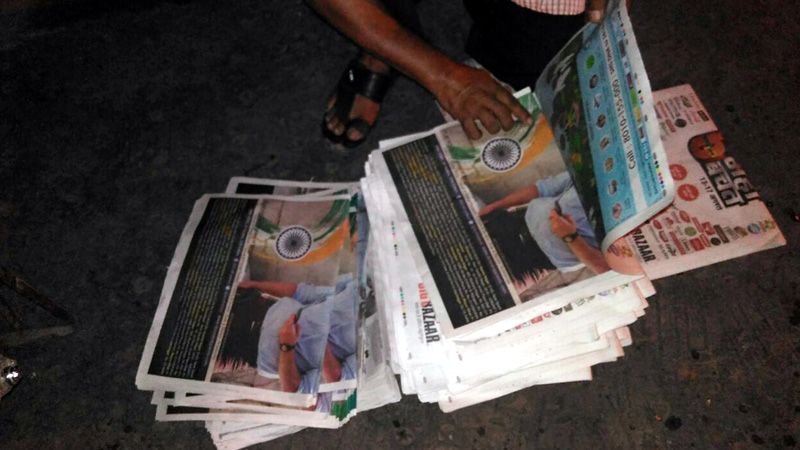
How do you put your offer into just the right neighbourhoods, the homes that can actually walk into your shop, without paying to reach the whole city? Newspaper insertion is the answer most local businesses overlook. A printed flyer dropped inside the morning paper can be delivered into the copies that go to specific pincodes, localities, or even individual dealer routes, so your budget lands only on the households in your catchment. It is the most precise offline-targeting format available, at an estimated Rs 1 to Rs 2.50 per home reached including a basic flyer in 2026, and it puts a physical, keepable object, with your offer and a coupon, into the hands of the right people the next morning. This playbook shows how to do it in seven steps: define your pincodes, match them to editions and dealers, choose the paper, design the insert, set the budget, schedule the drop, and measure the response.
What pincode targeting actually means for your campaign
Newspapers reach homes through a network of dealers, each serving a defined delivery route. That distribution structure is what makes precise targeting possible: because every copy goes to a known route and area, an insert can be placed into only the copies bound for your chosen pincodes or neighbourhoods. So instead of buying the whole edition, you buy the homes that matter, the colonies, apartment complexes, and market catchments inside your service radius. For a local shop, clinic, coaching centre, or restaurant, that turns the newspaper from a mass medium into a hyperlocal one, with little wasted spend on households that will never visit. The skill is in mapping your catchment to the right pincodes and dealer routes, which the steps below set out.
Targeting levels: from city-wide to dealer-route
Insertion targeting comes in four broad levels, from the whole city down to a single dealer route. The right level depends on how local your business is and how tightly you want to control waste. The table sets them out.
Newspaper insertion targeting levels (2026)
| Precision and waste | Best for | |
|---|---|---|
| City-wide (all editions) | Broad reach, high waste for a local shop | Brand launches, city-wide offers, large chains |
| Edition / zone | Medium precision | Sub-city regions, multi-locality brands |
| Pincode / locality cluster | High precision, low waste | Local shops, clinics, schools, restaurants |
| Dealer-route micro-targeting | Highest precision (street-level routes) | Hyperlocal stores, new-store launch radius |
Choose the tightest level that still covers your catchment; pincode-cluster targeting is the usual sweet spot for a single-location business. Confirm deliverable home counts per level before booking.
How to run a pincode-targeted insertion campaign: 7 steps
The method below takes a campaign from a blank map to a measured result. Work through the steps in order; the early ones, especially matching pincodes to dealer routes, are where most of the precision and savings are won.
Define your catchment by pincode
List the pincodes your customers actually come from. Start with your store or service location and draw a realistic travel radius, then write down every pincode and named locality inside it, the colonies, apartment clusters, and market areas. If you already have customer addresses or delivery data, use them to confirm which pincodes convert. This list is the foundation of the whole campaign: targeting can only be as precise as the catchment you define.
Match pincodes to newspaper editions and dealer routes
For each target pincode, identify which newspaper editions and which dealers and routes serve it. This is the step most advertisers skip, and it is where the targeting is really made: the goal is to insert only into the copies that reach your pincodes. A distribution partner can map your pincode list to the editions and dealer routes that cover it and tell you the deliverable home count per area, so you know exactly what you are buying.
Choose the newspaper by language and readership
Within those editions, pick the paper or papers that best fit your target homes, by language and readership, not just the largest title. In many localities a regional-language daily reaches more of the right households than the biggest English paper, and the reverse can be true in others. If your catchment is mixed, you may split the run across two papers. Choosing by who actually reads in your pincodes is what makes the insert land with the right audience.
Design the insert around one clear local offer
Design the flyer for the offer and the locality. Lead with one clear, specific offer or reason to visit, keep the layout clean and legible, write in the language of the area, and reference the neighbourhood or a nearby landmark so it reads as local. Include your address, a simple map or directions, contact details, and a trackable element, a coupon code, QR, or dedicated number, so the flyer both sells and measures. A keepable, offer-led flyer outperforms a generic brochure.
Set quantity and budget from the home count
Set the quantity to the deliverable home count in your chosen pincodes and dealer routes, and the budget to that count times the per-piece rate, an estimated Rs 1 to Rs 2.50 per home including a basic flyer in 2026. Larger runs lower the per-piece cost, but resist widening the catchment just to hit a volume; precision is the point. Decide whether to cover your full catchment once or to test the strongest pincodes first and scale into what works.
Schedule the drop on the right day
Pick the drop date for when your audience reads and acts. Weekends often carry higher readership and dwell time, and festive or pay-day weeks lift response for retail offers, so align the drop with your busiest buying window and any promotion. Give the printer and distributor enough lead time to print the run and brief the dealers. For seasonal pushes like Diwali or the wedding season, book the slot early, as drop dates fill up.
Verify delivery and measure response
After the drop, verify delivery with the distributor, then measure response through the trackable element on the flyer. Count coupon redemptions, QR scans, or calls, and, if you used a different code per pincode, compare which localities converted best. Divide responses by inserts delivered in each area to get a response rate, then reinvest into the pincodes that performed and drop the ones that did not. This closes the loop and turns the next campaign into an improvement on the last.
Why measurement is the difference between guessing and scaling
Most insertion campaigns underperform not because the format is weak but because nobody measures them, so there is no way to know which pincodes worked and the next drop repeats the same guesses. The fix is simple and cheap: a unique code or QR on the flyer, ideally varied by pincode, and a habit of counting redemptions against inserts delivered. Within one or two campaigns you learn your real response rate, your best-converting localities, and your cost per response, and you can shift budget from weak areas to strong ones. That is how a local business turns newspaper insertion into a compounding channel rather than a one-off leaflet drop, and it is the single highest-return habit in this playbook.
Can I really target a single pincode or locality with newspaper insertion?
Yes. Because newspapers are delivered through dealers serving defined routes, inserts can be placed into only the copies that reach a chosen pincode, locality, or even a single dealer route, so you can target down to street level in many areas. The practical limit is the deliverable home count in that area and which papers serve it, which a distribution partner can map for you. For a single-location business, pincode or dealer-route targeting concentrates the budget on the homes that can actually visit, which is exactly what makes insertion so cost-effective for local marketing compared with a city-wide buy.
Which day is best to drop a newspaper insert?
The best day depends on your audience and offer, but weekends often carry higher readership and more dwell time, which lifts response for retail and consumer offers, and festive or pay-day weeks tend to perform well because households are in a buying mood. Align the drop with your busiest buying window and any promotion you are running, rather than dropping on a quiet midweek day by default. For seasonal campaigns such as Diwali or the wedding season, book your slot early, because popular drop dates fill up and you want the insert in homes before the rush, not after it.
How many inserts should a local shop order?
Order to the deliverable home count in your target pincodes, not to a round number. Map your catchment, get the home count per pincode and dealer route from your distributor, and cover the areas that matter, which for a single shop is often a few thousand to a few tens of thousands of homes. If the budget is tight or you are unsure, test the strongest two or three pincodes first, measure the response, and scale into what works rather than dropping city-wide. Resist widening the catchment just to lower the per-piece price, because the extra homes outside your radius are mostly waste.
What should a newspaper insert flyer include?
A good insert leads with one clear, specific offer or reason to visit, in the language of the area, with a clean, legible layout. Include your shop name and address, simple directions or a small map, a nearby landmark so it reads as local, your contact details and WhatsApp, and a trackable element, a coupon code, QR code, or dedicated number, so it both sells and measures. Keep it to a single strong message rather than a cluttered brochure, and make the offer worth keeping the flyer for. A keepable, offer-led, locally worded flyer with a way to respond outperforms a generic design every time.
Looking for professional Newspaper Insertion services?
The Mediaverse runs end-to-end newspaper insertion campaigns across India with geo-tagged delivery and transparent, all-inclusive pricing.
Explore our Newspaper Insertion solutionsSummarize this guide with AI
Open this article in your favourite AI assistant
Related Guides
Written by

The Mediaverse Team
India's Leading Outdoor Advertising Agency
The Mediaverse is a national-level outdoor advertising and integrated marketing organization that provides complete OOH, ATL, BTL, retail, and transit media solutions across India. With years of experience executing high-performance campaigns for brands in FMCG, Real Estate, E-commerce, EdTech, Automotive, Healthcare, and Retail, The Mediaverse combines creativity, data-driven media planning, and flawless on-ground execution. As a full-stack outdoor advertising provider, The Mediaverse offers Auto Branding, Mobile Van Branding, Newspaper Insertion Advertising, Shop Name Board Branding, In-Store Branding, Hoardings, Transit Media, Kiosks, Mall Media, Activations, and all forms of Below-The-Line marketing. Known for its pan-India network, strategic route planning, premium print quality, and Cheqmate™ GPS-based verification, The Mediaverse ensures 100% transparent and result-oriented campaign delivery. The Mediaverse’s editorial team produces deeply researched, SEO-optimized, and generative-engine-friendly content to help businesses understand the power of outdoor advertising and make informed decisions that maximize brand visibility and ROI across urban, suburban, and rural markets.
Related Articles
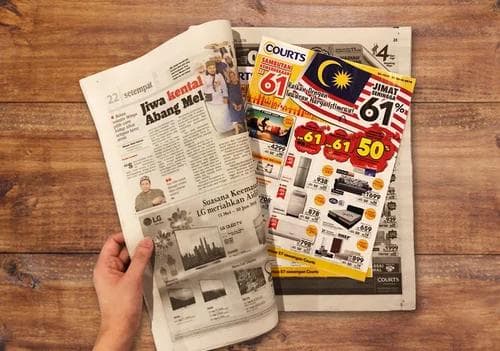
Print inserts or digital ads for a local business: the 2026 budget-split decision guide
Is newspaper insertion still worth it against digital ads in 2026? A decision guide with a spec table, when each wins, how to combine them, and a checklist for local businesses.
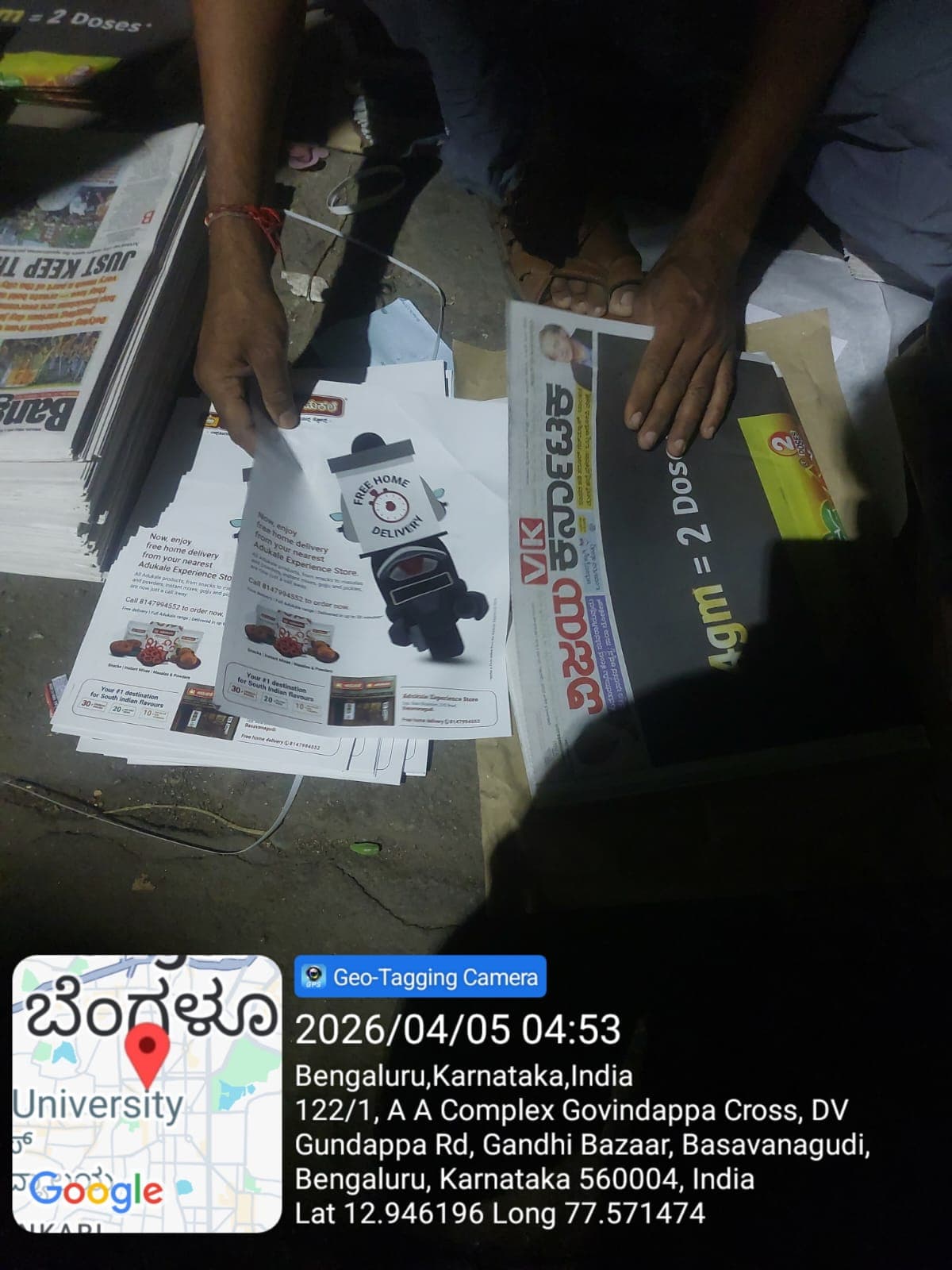
Newspaper insertion in Lucknow: Hazratganj to Gomti Nagar rate map and 2026 advertiser playbook
I spent four months in Lucknow last year auditing newspaper distribution routes from Hazratganj to Gomti Nagar to outer Aliganj. Three things surprised me. Here is the 2026 city guide that came out of that work.
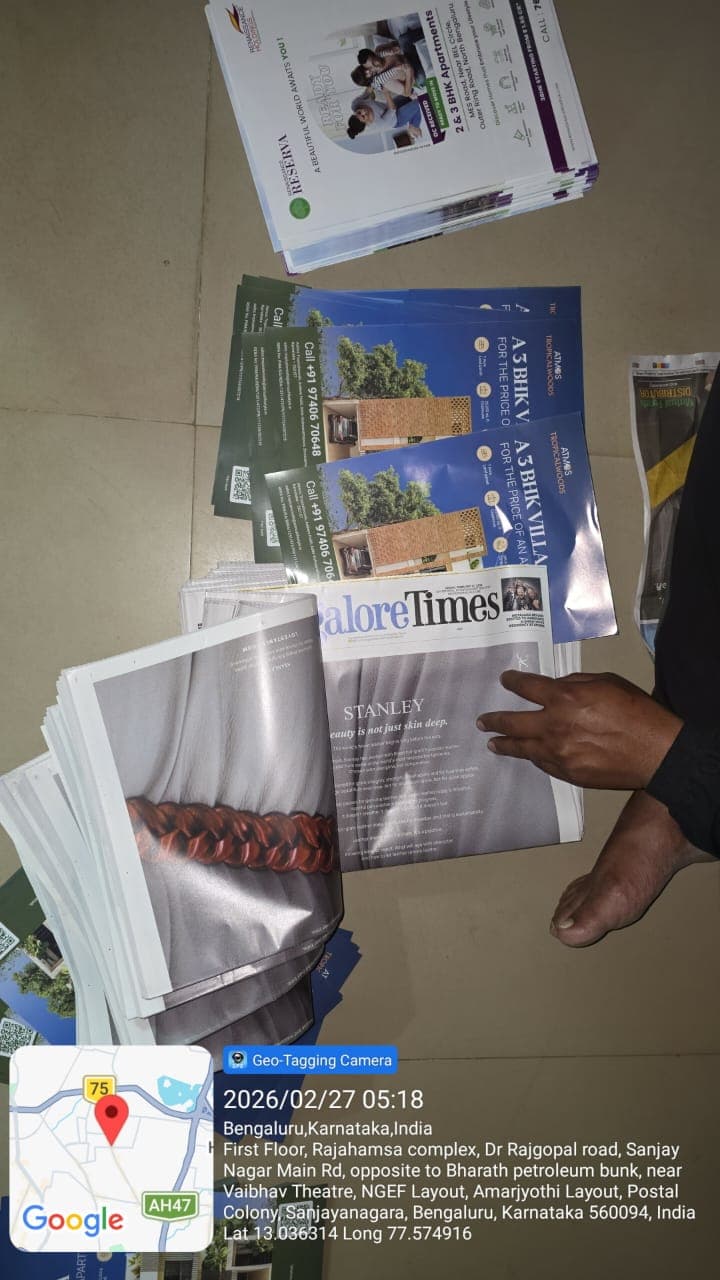
Newspaper insertion in Jaipur: Pink City heritage and 2026 zone rate map for advertisers
Jaipur is the only Indian metro where heritage-zone advertising restrictions materially affect newspaper insertion campaign design. A wrong artwork inside a walled-city pincode gets pulled by JMC Heritage zonal officers, regardless of the newspaper. Here is the 2026 city guide.