

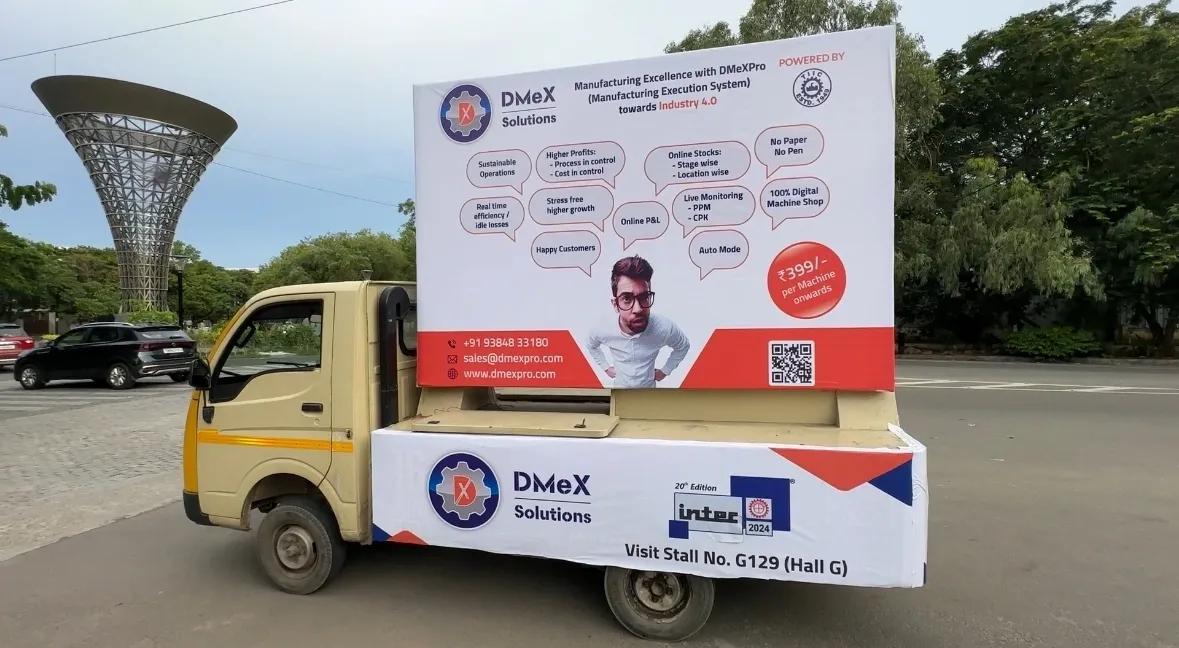
Kolkata's mobile van market runs on Durga Puja economics in a way no other Indian metro replicates. The September-October Puja window concentrates roughly 35 percent of annual mobile van spend into six weeks. Mobile van demand spikes 58 percent versus the August baseline. Fleet utilisation hits 92 percent during the Sashthi-to-Dashami peak. Rates climb 35 to 50 percent. Brands that book Puja campaigns 45 to 60 days ahead pay standard-rate-plus-premium and convert spectacularly. Brands that book inside 14 days of Puja pay 65 to 80 percent premiums and may get no fleet at all. Brands that ignore Puja and spend their Kolkata mobile van budget in August or November optimise for cost but miss the audience-attention peak. The right campaign-design decision in Kolkata is upstream of every rate negotiation: when is your campaign, and is it Puja-relevant. This guide unpacks the 2026 Kolkata economics, route, and regulator specifics that follow.
KMC and Howrah Municipal Corporation dual-body reality
Kolkata mobile van advertising operates under two distinct municipal bodies. Kolkata Municipal Corporation (KMC) governs 144 wards across 16 boroughs south of the Hooghly River, covering Park Street through Salt Lake to New Town in the east, Behala-Jadavpur-Garia in the south, and Dum Dum-Lake Town in the north. Howrah Municipal Corporation (HMC) governs 50 wards across the Hooghly. Any campaign that crosses the Howrah Bridge or the Vidyasagar Setu requires permits from both bodies. The two municipalities' permit processes are not coordinated, which makes cross-river campaigns 4 to 6 working days slower to launch and 8 to 12 percent more expensive in administrative overhead than single-body campaigns.
Operational implication. Plan briefs at least 7 working days ahead for any cross-Hooghly route. KMC permits take 2 to 4 working days for first-time advertisers and 1 to 2 days for repeat. HMC permits take 3 to 5 working days for first-time and 1 to 2 days for repeat. Vendors with active operating history across both bodies can compress this to 3 working days total but premium for the speed.
How do Kolkata's three van pricing zones differ?
Zone A: South Kolkata HNI premium (Park Street, Ballygunge, Alipore)
Park Street (700016), Bhowanipore (700020), Ballygunge (700019), Alipore (700027), Lake Gardens (700045), Tollygunge (700033). Per-day rates run 12 to 16 percent above city average. ₹3,100 to ₹3,200 per day for T-Shape, ₹3,600 for L-Shape, ₹5,000 for Canter, ₹9,000 for LED. The zone reaches Marwari and Bengali bhadralok HNI households plus the South Kolkata premium retail audience. For luxury, premium retail, fine dining, jewellery, and high-ticket finance, this zone delivers 3 to 4 times the luxury-category conversion versus mass-market alternatives.
Zone B: Salt Lake-New Town IT corridor (700064, 700091, 700156)
Salt Lake Sectors I-V (700064, 700091), New Town Action Area I-III (700156), Rajarhat. Per-day rates track the city average within 5 to 8 percent corporate premium. ₹2,950 per day for T-Shape, ₹3,350 for L-Shape, ₹4,750 for Canter, ₹8,500 for LED. The corridor reaches Kolkata's IT and corporate workforce: TCS Gitanjali Park, Wipro Sector V, Cognizant, Capgemini, plus the major MNC campuses. The Sector V evening corporate-departure window (5 PM to 9 PM) delivers 11.2 lakh impressions per van per day, the primary B2B impression window in Kolkata outside the South Kolkata core. For B2B SaaS, EdTech, fintech, and corporate brand campaigns, this corridor delivers 2.6 times the relevant-impression conversion versus mass-market routes.
Zone C: VIP Road-EM Bypass plus suburbs and Howrah
VIP Road (airport-to-city corridor through Bidhannagar, Kestopur, Baguiati), EM Bypass (the eastern arterial through Garia, Patuli, Tollygunge), plus the Howrah side across the Hooghly. Per-day rates run at city average baseline: ₹2,800 T-Shape, ₹3,200 L-Shape, ₹4,500 Canter, ₹8,000 LED. VIP Road specifically delivers 16.4 lakh impressions per van per day driven by airport traffic plus the Salt Lake corporate commuter flow. For mass-market, FMCG, family-decision, OTT launches, and city-wide brand awareness, VIP Road plus EM Bypass is the dominant choice. Howrah-side cross-river operations add 8 to 12 percent for dual-municipal permits but reach the industrial Howrah audience plus the cross-bridge commuter flow.
Kolkata Mobile Van Rates by Zone (2026)
| T-Shape | L-Shape | Canter | LED | |
|---|---|---|---|---|
| Zone A: South Kolkata HNI (Park Street, Ballygunge, Alipore) | ₹3,100 to 3,200/day | ₹3,600/day | ₹5,000/day | ₹9,000/day |
| Zone B: Salt Lake-New Town IT corridor | ₹2,950/day | ₹3,350/day | ₹4,750/day | ₹8,500/day |
| Zone C: VIP Road-EM Bypass plus Howrah | ₹2,800/day | ₹3,200/day | ₹4,500/day | ₹8,000/day |
Durga Puja adds 35 to 50 percent booked ahead and 65 to 80 percent inside 14 days. Cross-Hooghly routes add 8 to 12 percent dual-permit overhead. GST extra.
VIP Road to Salt Lake: the airport-to-IT arc
The corridor from Kolkata airport through VIP Road, Ultadanga, and Salt Lake to New Town carries roughly 50 percent of Kolkata mobile van impression volume. The Mediaverse 2026 rate map: Kolkata airport vicinity (700052): ₹2,900 T-Shape per day. VIP Road Kestopur (700102): ₹2,800 T-Shape. VIP Road Baguiati (700059): ₹2,800 T-Shape. Ultadanga (700067): ₹2,900 T-Shape. Salt Lake Sector III (700064): ₹2,950 T-Shape. Salt Lake Sector V (700091): ₹2,950 T-Shape. New Town Action Area I (700156): ₹2,900 T-Shape. The arc maintains rate parity within 6 percent across 18 kilometres because the corridor's commercial-and-corporate-and-airport demographic mix sustains consistent rates.
Operationally, the arc has one quirk worth knowing. VIP Road during 6 PM to 10 PM evening flight-arrival window delivers significantly higher impressions than midday operations: 22.8 lakh per van peak versus 14.2 lakh midday average. Airport arrivals plus IT-corridor departure plus Salt Lake retail flow all compound during this window. Campaign plans that over-allocate VIP Road to evening hours outperform balanced daytime allocations by 18 to 28 percent on cost-per-impression.
Durga Puja economics
Durga Puja is Kolkata's commercial peak. The September-October cycle (Mahalaya through Dashami, typically a 10 to 14 day intensive window with shopping ramp-up starting 3 to 4 weeks earlier) drives 35 percent of annual mobile van advertising spend in Kolkata. Mobile van demand spikes 58 percent versus August baseline. Fleet utilisation hits 92 percent during the Sashthi-to-Dashami peak meaning roughly 8 percent of partner fleet remains available for last-minute booking. Rates climb 35 to 50 percent for booked-ahead campaigns and 65 to 80 percent for inside-14-day emergency bookings.
Operational implications are sharp. First, book Puja campaigns 45 to 60 days ahead minimum. Second, brands targeting Puja-shopping categories (jewellery, ethnic-wear, sarees, automotive, premium retail, food, hospitality) see 2.6 to 3.4 times higher response rates that comfortably justify the rate premium. Third, brands targeting non-Puja categories (B2B SaaS, finance, industrial) should shift launches to August (pre-Puja) or November (post-Puja) when rates normalise. Bengali-primary creative outperforms English-primary by 35 to 50 percent during Puja window for retail categories per Mediaverse Q3-Q4 2025 attribution data, so artwork pre-screening for Bengali compliance is essential.
Monsoon, KMC compliance, and Bengali-language artwork
Kolkata monsoon (June-September) affects mobile van operations across South Kolkata low-lying zones, Howrah Bridge access during heavy rain, and the Maa Flyover during the worst events. The Mediaverse field data measures 12 to 17 percent route-inaccessibility during heavy rain weeks. Three operational responses work: shift routes to EM Bypass plus VIP Road during South Kolkata flooding, prefer LED van for monsoon because larger vehicles handle waterlogging better, and time campaigns to October-May for cleanest economics.
KMC compliance points apply to mobile van artwork. First, no political content within 14 days of any election under WBEC or KMC jurisdiction. Second, Bengali-language artwork is preferred but not legally mandated; bilingual English-Bengali artwork at proportional size passes KMC pre-screen. Third, heritage-zone proximity restrictions around Victoria Memorial, Indian Museum, and the Maidan limit LED van stationary operations within 200 metres. Plan creative pre-screening 3 to 4 working days ahead.
Kolkata vendor ecosystem
Three vendor types operate. The fleet owner-operators (3 to 12 vans each, based in Howrah industrial zone, Dum Dum, or Garia industrial estates) offer the cheapest per-day rate but require the advertiser to handle KMC, HMC, and creative pre-screening separately. The Kolkata mobile van specialists aggregate 60 to 200 vehicles, hold active permits across KMC and HMC, and handle Bengali-language artwork pre-screening. The Mediaverse covers 480 vehicles via partner agreements. Multi-vehicle multi-day campaigns above ₹1 lakh typically save 10 to 14 percent through specialist booking. The third vendor type is experiential-marketing combines specialising in Puja activations: van plus pandal-adjacent sampling, plus Puja-themed promoter activations targeting the Mahalaya-to-Dashami audience.
A 2026 Kolkata mobile van campaign launch playbook
A premium jewellery brand launching a Mahalaya-week campaign across South Kolkata and Salt Lake. ₹7 lakh all-in budget. Target: 28 to 60 year old Marwari and Bengali HNI households across Park Street, Ballygunge, Alipore, Salt Lake, and the New Town residential belt. Goal: store walk-ins during the 14-day Puja peak.
Step 1, budget. ₹7,00,000 minus 18 percent GST = ₹5,93,220 ex-GST. Reserve ₹45,000 for creative including Bengali-language pre-screening. Reserve ₹55,000 for KMC permits across multiple zones. Working media budget: ₹4,93,220. Apply Puja-window 40 percent premium on baseline rates.
Step 2, vehicle mix at Puja rates. 1 LED van for Park Street stationary visibility at ₹12,500 per day Puja rate (40 percent premium on ₹9,000 baseline) and 3 T-Shape vans at ₹4,400 per day Puja rate (₹3,150 baseline plus premium) for 14 days = ₹1,75,000 (LED) + ₹1,84,800 (T-Shape) = ₹3,59,800. Adds reserve for fleet-emergency contingency.
Step 3, route allocation. The LED van runs stationary 6-hour windows at Park Street, Esplanade-Mahaveer Tower, and South City Mall during evening 4 PM to 10 PM Puja shopping peak. The 3 T-Shape vans run the South Kolkata loop (Ballygunge-Alipore-Bhowanipore) in morning then Salt Lake-New Town residential loop in evening. Daily impression count estimate: 4 vans times 16 lakh average (Puja peak elevated) equals 64 lakh daily impressions. Over 14 days: 9 crore total. With 11 percent unique-reach: 1 crore unique exposures across the HNI Puja-shopping demographic.
Step 4, attribution. Unique Bengali-language QR codes per vehicle routing to Bengali jewellery-collection landing pages. Bengali missed-call number on each van. Issue Mahalaya-week jewellery-purchase tokens (book consultation appointment online for offline visit). GPS-tracked daily routes with hourly footfall-conversion correlation at store level.
What makes a Kolkata campaign work
Three disciplines drive Kolkata campaign success. First, Puja-window discipline: time festival-relevant categories to Mahalaya-Dashami, time non-festival categories to August or November. Brands paying Puja premiums without festival fit overpay; brands skipping Puja for festival-relevant categories underdeliver. Second, Bengali-language artwork pre-screening: Bengali-primary creative outperforms English-primary by 35 to 50 percent in retail categories. Third, corridor-matched-to-audience: VIP Road for mass-market and airport-corridor exposure, Salt Lake-New Town for B2B and corporate, South Kolkata for HNI and luxury. Mismatch drops conversion by 30 to 50 percent. Brands practising these three see 2 to 3 times per-rupee response of brands that treat Kolkata as a generic East Indian metro.
Bottom line for a 2026 Kolkata mobile van campaign
Pick your audience first (Puja-shopping HNI, IT-corporate, mass-market, retail-decision). Pick your corridor second (South Kolkata HNI, Salt Lake-New Town B2B, VIP Road mass-market, Howrah cross-river). Pick your timing third (Puja peak for festival-relevant, August or November for everything else). Book Puja campaigns 45 to 60 days ahead minimum. Pre-screen Bengali-language artwork 4 working days ahead. With these five disciplines your Kolkata mobile van campaign will outperform digital channels for retail, luxury, B2B, and direct-response objectives by 2 to 4 times on landed cost-per-walk-in or conversion.
What happens to my Kolkata mobile van campaign if I book inside 14 days of Durga Puja?
Three outcomes are likely. First, 65 to 80 percent rate premium if any fleet remains available. Second, fleet may be entirely unavailable for premium routes (Park Street, Salt Lake Sector V) because partner-fleet capacity hits 92 percent during peak. Third, you may end up with sub-optimal vehicles (older Tata Ace units rather than newer ones, T-Shape only when Canter was preferred) that under-deliver on creative quality. The standard recommendation: book Puja campaigns 45 to 60 days ahead or shift to a non-Puja window.
Does the Maa Flyover route help avoid Howrah Bridge bottlenecks for cross-city campaigns?
Yes. The Maa Flyover (Park Circus to Park Street to AJC Bose Road extended route) opened in 2017 and now carries roughly 25 percent of cross-city traffic that used to bottleneck at Howrah Bridge or use longer EM Bypass routes. For South Kolkata to Central or North Kolkata routing, the Maa Flyover plus EM Bypass combination delivers cross-city reach in 35 to 50 percent less time than the Howrah Bridge route. For genuinely Howrah-targeted campaigns the bridge route remains necessary, but cross-city brand awareness campaigns should default to Maa Flyover plus EM Bypass.
What is the smallest Kolkata mobile van campaign that still works?
2-vehicle 7-day single-corridor campaigns are the practical floor in non-Puja windows. Below 2 vehicles, unique-reach for any corridor drops below 35 percent of target audience. Below 7 days, brand-recall frequency does not build sufficiently. During Puja window, the practical floor rises to 4-vehicle 10-day campaigns because of fleet-availability constraints and Puja-shopping decision-window timing. Below the Puja floor, brands should defer to non-Puja windows where smaller campaigns work.
Looking for professional Mobile Van Branding services?
The Mediaverse runs end-to-end mobile van branding campaigns across India with geo-tagged delivery and transparent, all-inclusive pricing.
Explore our Mobile Van Branding solutionsSummarize this guide with AI
Open this article in your favourite AI assistant
Related Guides
Written by

The Mediaverse Team
India's Leading Outdoor Advertising Agency
The Mediaverse is a national-level outdoor advertising and integrated marketing organization that provides complete OOH, ATL, BTL, retail, and transit media solutions across India. With years of experience executing high-performance campaigns for brands in FMCG, Real Estate, E-commerce, EdTech, Automotive, Healthcare, and Retail, The Mediaverse combines creativity, data-driven media planning, and flawless on-ground execution. As a full-stack outdoor advertising provider, The Mediaverse offers Auto Branding, Mobile Van Branding, Newspaper Insertion Advertising, Shop Name Board Branding, In-Store Branding, Hoardings, Transit Media, Kiosks, Mall Media, Activations, and all forms of Below-The-Line marketing. Known for its pan-India network, strategic route planning, premium print quality, and Cheqmate™ GPS-based verification, The Mediaverse ensures 100% transparent and result-oriented campaign delivery. The Mediaverse’s editorial team produces deeply researched, SEO-optimized, and generative-engine-friendly content to help businesses understand the power of outdoor advertising and make informed decisions that maximize brand visibility and ROI across urban, suburban, and rural markets.
Related Articles
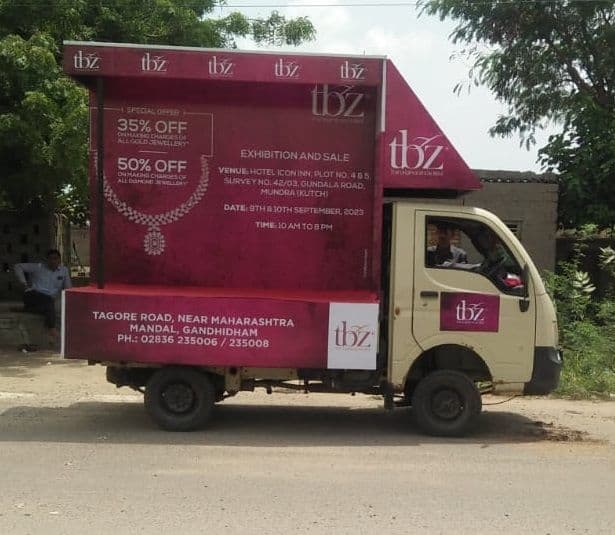
Mobile van branding in India: the complete 2026 guide to cost, formats, and campaigns
What does mobile van branding cost, which van type should you choose, and when does it beat other formats? The complete 2026 guide to planning a mobile van advertising campaign in India.
Festive season 2026 advertising booking calendar: when to book each format before the rush
When should you book festive advertising for 2026? A booking calendar with format lead times, a step-by-step process, and the timing rules to lock inventory before the Ganesh-to-Diwali rush.
Mobile van branding in Jaipur: Pink City heritage rules and 2026 wedding-season rate map
I learned what Jaipur mobile van advertising actually costs the hard way: by spec-quoting a campaign at Mumbai rates, signing it with an MI Road route, and watching JMC Heritage zonal officers stop the vehicles at the walled-city perimeter on day three. Three things went wrong. This is the 2026 guide that came out of fixing them.