

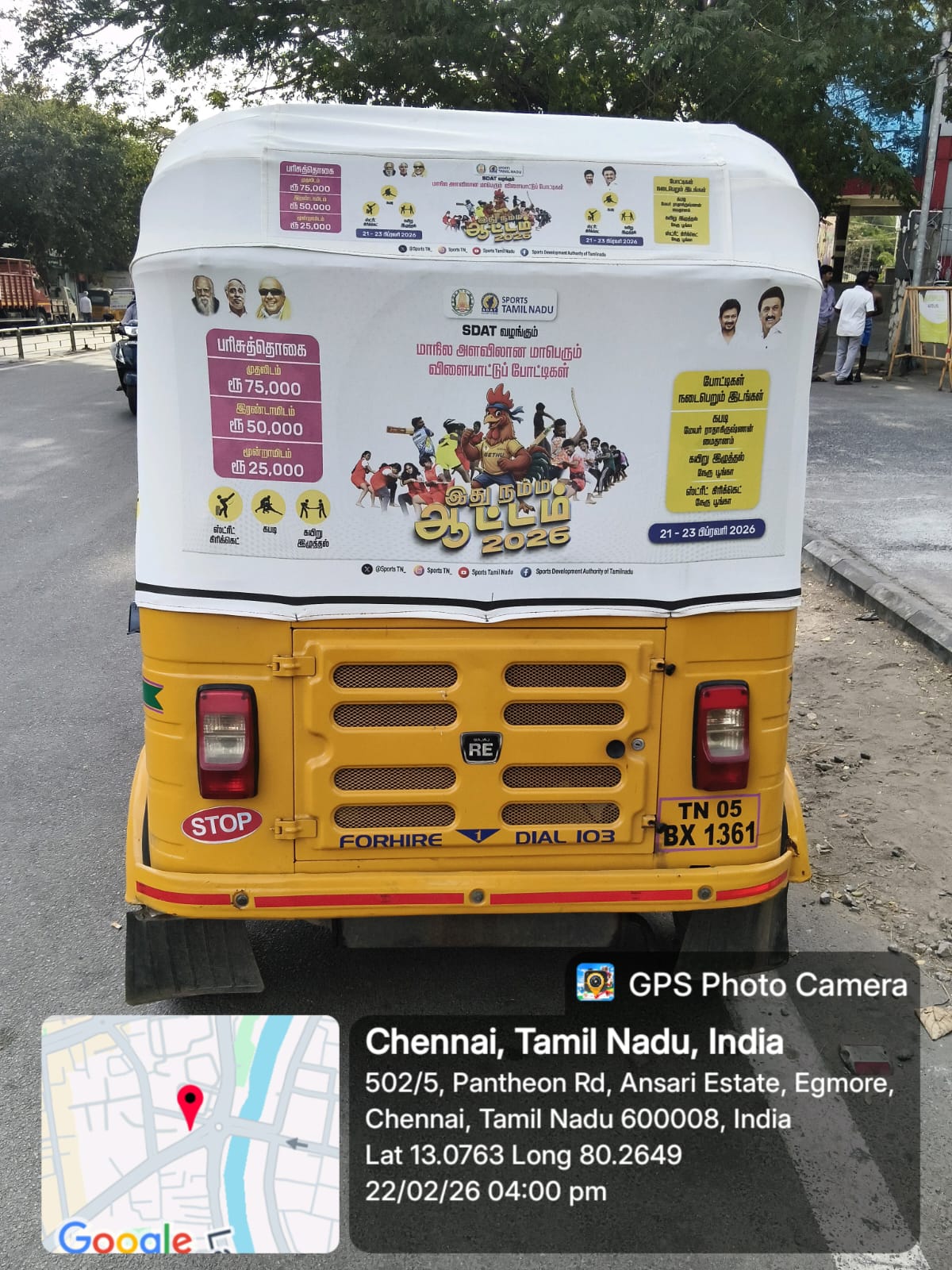
Mumbai runs roughly 4.5 lakh auto-rickshaws, the largest auto fleet in Asia and more than three times Delhi's. But the single most important fact for any advertiser is where those autos do and do not go: auto-rickshaws are not permitted in Mumbai's island city south of the Mahim and Sion boundary, where only black-and-yellow taxis operate. Auto branding in Mumbai is therefore a suburban game, covering the Western line from Bandra to Borivali, the Central and Harbour belts, Powai, and the extended metros of Thane and Navi Mumbai. Full hood branding costs ₹550 to ₹650 per auto per month, back-panel stickers ₹150 to ₹180, and a full wrap ₹2,000 to ₹2,400, all inclusive of design, printing, installation, and maintenance. A single branded auto generates an estimated 28,000 to 40,000 daily impressions, higher than most cities because Mumbai's suburban traffic moves so slowly, at a cost-per-thousand of roughly ₹4 to ₹7. This guide covers the suburb map, the rates, MCGM rules, the Marathi factor, and the monsoon problem for 2026.
Mumbai auto branding at a glance: the numbers that matter
Eight numbers anchor a Mumbai auto branding plan in 2026. Fleet size: approximately 4.5 lakh registered auto-rickshaws across the suburbs, Thane, and Navi Mumbai. Operating area: suburbs only, north of the Mahim and Sion boundary. Hood branding rate: ₹550 to ₹650 per auto per month. Back-panel rate: ₹150 to ₹180 per auto per month. Full-wrap rate: ₹2,000 to ₹2,400 per auto per month. Daily impressions per auto: 28,000 to 40,000, lifted by slow suburban traffic. Cost-per-thousand impressions: ₹4 to ₹7. Recommended minimum for a single 3 to 5 km catchment: 25 to 35 autos for 30 days. One structural fact overrides all of these: there are no autos in South Mumbai, so the island city cannot be reached with this format.
Mumbai's 4.5 lakh autos and the South Mumbai blind spot
Mumbai's auto-rickshaw fleet is the largest in Asia, but it is geographically lopsided in a way no other Indian metro is. By long-standing Maharashtra transport rule, auto-rickshaws cannot ply in the island city, the stretch south of the Mahim Causeway and Sion. That entire zone, including Colaba, Churchgate, Fort, Nariman Point, Worli, and Lower Parel, is served by metered black-and-yellow taxis and app cabs, not autos. The practical consequence is blunt: if your customers sit in South Mumbai, an auto branding campaign physically cannot put your brand in front of them. The 4.5 lakh autos all live north of that line, across the Western, Central, and Harbour suburbs and the satellite cities.
For most advertisers this is good news, because Mumbai's population and consumption are overwhelmingly suburban. Andheri alone is denser and more commercially active than the entire island city. But it changes how you brief a campaign. A South Mumbai jeweller or a Worli D2C brand should reach for taxi branding, mobile vans, or print rather than autos. A suburban retailer, clinic, coaching centre, or real-estate project, by contrast, sits exactly where the fleet is thickest. Always map your catchment against the Mahim and Sion line before committing a rupee to auto branding in Mumbai.
Why Mumbai auto branding sits at the top of the national price band
Mumbai hood branding lands at ₹550 to ₹650 per auto per month, and serious campaigns should budget for the upper end. Mumbai is the densest, highest-demand advertising market in the country, vendor capacity in prime suburbs like Bandra and Andheri is tight, and operator costs (parking, permits, driver incentives) are the highest of any Indian city. Back-panel stickers at ₹150 to ₹180 and full wraps at ₹2,000 to ₹2,400 follow the same logic. The rate includes design, printing, installation, and monthly maintenance, and a free-replacement clause matters more here than anywhere else because of the monsoon.
Yet even at the top of the band, auto branding remains the cheapest outdoor format in Mumbai on a cost-per-thousand basis, an estimated ₹4 to ₹7 per thousand impressions. A single hoarding on the Western Express Highway can cost more for one month than 40 branded autos circulating the same suburbs, and the autos go where hoardings cannot, deep into residential lanes and market clusters. The premium you pay in Mumbai buys access to the densest captive audience in India; the format still wins on efficiency.
The Mumbai suburb map: where to concentrate your fleet
Mumbai is too big and too linear to blanket. The city stretches over 40 km north to south along two suburban railway lines, so spreading 30 autos across the whole map wastes frequency. Pick one of four belts and saturate it.
Western suburbs: Andheri, Bandra, Borivali, Malad, Goregaon, Juhu
The Western line is the commercial heart of suburban Mumbai and the highest-value auto belt. Andheri (East and West) blends offices, retail, and dense residential; Bandra carries premium retail and a young, brand-aware audience; Borivali, Malad, and Goregaon deliver mass-market family footfall along the Western Express Highway and SV Road. This belt suits retail, restaurants, real estate, education, and D2C. Expect the highest vendor rates here, and concentrate autos around station catchments (Andheri, Borivali, Malad) where commuter dwell time peaks.
Central and Harbour line: Dadar, Kurla, Ghatkopar, Chembur
The Central and Harbour belts deliver mass-market and commuter reach at slightly lower cost than the West. Dadar (north of Mahim, so autos run here) is one of the busiest retail and transit nodes in the city; Kurla and Ghatkopar anchor huge residential and mid-market retail catchments around the LBS Marg corridor; Chembur adds a settled, family demographic. This belt is ideal for value retail, FMCG sampling tie-ins, healthcare, and education brands chasing volume over premium positioning.
Powai and the BKC fringe: premium and corporate targeting
Powai is an affluent, self-contained micro-market with IT offices, premium residential, and a large student population around the institutes near Powai Lake. Autos circulating Hiranandani and the Powai-Vikhroli stretch reach a high-income, high-intent audience that hoardings price out. The BKC fringe (autos serve the Kurla and Bandra approaches to Bandra Kurla Complex, India's prime corporate district) lets B2B, fintech, education, and premium brands target the corporate workforce on their commute. Use bilingual Marathi-English creative here; the audience skews professional and pan-Indian.
Extended metro: Thane and Navi Mumbai
Thane and Navi Mumbai (Vashi, Nerul, Kharghar, Panvel) are the fastest-growing residential catchments in the metropolitan region, with newer housing stock, younger families, and noticeably lower vendor rates than the island-side suburbs. For real-estate launches, large-format retail, schools, and hospitals targeting these belts, autos deliver excellent value, often 10 to 15 percent cheaper per auto than the Western line. Treat Thane and Navi Mumbai as their own campaigns rather than an add-on to a Mumbai-suburbs plan; the audiences and travel patterns are distinct.
Hood, back-panel, or full wrap: choosing a format for Mumbai
Hood branding is the Mumbai default: the rexine hood wrap sits at eye level for pedestrians and two-wheeler riders, who make up the bulk of suburban road users, and it survives the monsoon better than panel stickers when done in hot-laminate vinyl. Back-panel stickers at ₹150 to ₹180 are the cheapest entry point and work for simple awareness or a phone-number-led offer, but they are read mainly by the vehicle directly behind. Full wraps at ₹2,000 to ₹2,400 maximise impact for launches and premium brands but are best reserved for a small hero fleet rather than the whole campaign.
Mumbai auto branding format rates (2026)
| Format | Rate (per auto per month) | Best use | |
|---|---|---|---|
| Full hood | ₹550 to ₹650 | Best visibility-to-cost balance; the default for Mumbai campaigns | |
| Back-panel sticker | ₹150 to ₹180 | Simple awareness or phone-number offers; read mainly by the vehicle behind | |
| Full wrap | ₹2,000 to ₹2,400 | Launches and premium brands; reserve for a small hero fleet |
Rates inclusive of design, printing, installation, and maintenance; GST extra.
For most suburban Mumbai campaigns, the highest-ROI structure is a hood-led fleet of 25 to 40 autos saturating one belt, with a handful of full wraps as a visibility anchor at key station catchments. Avoid the common mistake of buying back-panels citywide to chase a big auto count; 40 hoods in Andheri will outperform 120 back-panels scattered from Borivali to Chembur, because frequency within a tight radius is what drives recall and walk-ins.
MCGM rules and the Marathi-language factor
Auto advertising is legal across the Mumbai suburbs subject to clear conditions. The branding requires the consent of the auto owner and driver, must not obstruct the registration plate, permit, fare card, or the driver's visibility, and must comply with MCGM outdoor norms and Maharashtra Motor Vehicle rules. There is no state-mandated rate ceiling, so pricing is set by the market. A reputable vendor handles owner and driver consent and ensures placement stays within the legal envelope; confirm this in writing before signing, because non-compliant placement can see autos pulled off the road mid-campaign.
On creative, Marathi matters. Maharashtra norms favour Marathi-language prominence on public signage, and beyond compliance, Marathi or bilingual Marathi-English artwork simply converts better across suburban residential and mass-market catchments where Marathi is the everyday language. The one belt where English-led bilingual creative holds up is the BKC and Powai corporate fringe, with its pan-Indian professional audience. The costly out-of-state mistake is running a single English-only creative citywide; for the Western, Central, and Harbour residential belts, lead with Marathi and keep English secondary.
The monsoon problem: why vinyl grade decides your Mumbai campaign
No city punishes cheap vinyl like Mumbai. The June to September monsoon dumps roughly 2,200 mm of rain on the city, and weeks of standing water, humidity, and wind shred poorly laminated artwork. The Mediaverse durability guidance is clear: 4 mil hot-laminate hood vinyl held under an estimated 10 percent mid-campaign damage through a Mumbai monsoon, versus 20 to 28 percent for cheap cold-laminate, where prolonged wet conditions accelerate adhesive failure and edges peel. If you run a campaign between June and September, the vinyl grade is not a detail, it is the campaign. Insist on hot-laminate, confirm the mil thickness in writing, and make sure a free-replacement clause for monsoon-damaged units is in the contract. A torn, peeling wrap does more brand harm than no campaign at all.
Measuring ROI on a Mumbai auto campaign
Auto branding is a frequency-and-recall medium, so measure it accordingly rather than expecting last-click attribution. Use a campaign-specific phone number or WhatsApp line on the artwork, a dedicated landing page or QR code, and a simple in-store question ("where did you hear about us") for the campaign window. Benchmark against the cost-per-thousand: at ₹4 to ₹7 per thousand impressions, a 30-auto hood campaign in one Western-suburbs catchment delivers an estimated 25 to 35 lakh impressions a month for roughly ₹16,500 to ₹19,500 before GST. Compare walk-in or enquiry lift against that spend over a 60 to 90 day window, because recall in outdoor builds over weeks, not days. Single-month auto campaigns almost always under-read their true effect.
Your Mumbai auto branding playbook
Five steps for a Mumbai campaign that works. First, confirm your audience is suburban; if it sits in South Mumbai, choose another format. Second, pick one belt (Western, Central-Harbour, Powai-BKC fringe, or Thane-Navi Mumbai) and saturate it with 25 to 40 autos rather than spreading thin. Third, lead with hood branding in hot-laminate vinyl, and add a few full wraps as anchors at station catchments. Fourth, brief Marathi-first or bilingual creative for residential belts and bilingual English-Marathi for the corporate fringe. Fifth, run for 60 to 90 days, not 30, and track via a dedicated number, QR, and walk-in question. Get those five right and Mumbai's slow, dense suburbs turn the city's biggest frustration, traffic, into your cheapest source of impressions.
Can I run auto branding in South Mumbai (Colaba, Worli, Fort)?
No. Auto-rickshaws are not allowed in Mumbai's island city south of the Mahim and Sion boundary, which includes Colaba, Churchgate, Fort, Nariman Point, Worli, and Lower Parel. That area is served by black-and-yellow taxis and app cabs. For South Mumbai audiences, use taxi branding, mobile vans, newspaper insertion, or shop signage instead. Auto branding in Mumbai only works for suburban catchments from Bandra and Sion northward, plus Thane and Navi Mumbai, so always check your target area against that line before booking.
Why does the monsoon matter so much for a Mumbai auto campaign?
Mumbai receives around 2,200 mm of rain between June and September, the heaviest of any major Indian metro, and prolonged wet conditions destroy cheap vinyl. The Mediaverse durability guidance found 4 mil hot-laminate hood vinyl held under an estimated 10 percent mid-campaign damage through a Mumbai monsoon, versus 20 to 28 percent for cheap cold-laminate. A peeling, faded wrap actively damages your brand, so in Mumbai the vinyl grade decides campaign quality. Confirm hot-laminate, the mil thickness, and a free-replacement clause for monsoon-damaged units in writing before you sign.
How many autos should a first Mumbai campaign book, and where?
Start with 25 to 40 hood-branded autos saturating a single belt rather than a thin spread across the city. For premium retail and brand-led campaigns, choose the Western suburbs (Andheri, Bandra, Borivali). For mass-market volume, choose the Central and Harbour line (Dadar, Kurla, Ghatkopar). For corporate and education, target Powai and the BKC fringe. For real-estate and value retail at lower cost, choose Thane or Navi Mumbai. Frequency within a tight 3 to 5 km radius drives recall and walk-ins, so concentration beats coverage every time in a city as large and linear as Mumbai.
Tags
Looking for professional Auto Branding services?
The Mediaverse runs end-to-end auto branding campaigns across India with geo-tagged delivery and transparent, all-inclusive pricing.
Explore our Auto Branding solutionsSummarize this guide with AI
Open this article in your favourite AI assistant
Related Guides
Written by

The Mediaverse Team
India's Leading Outdoor Advertising Agency
The Mediaverse is a national-level outdoor advertising and integrated marketing organization that provides complete OOH, ATL, BTL, retail, and transit media solutions across India. With years of experience executing high-performance campaigns for brands in FMCG, Real Estate, E-commerce, EdTech, Automotive, Healthcare, and Retail, The Mediaverse combines creativity, data-driven media planning, and flawless on-ground execution. As a full-stack outdoor advertising provider, The Mediaverse offers Auto Branding, Mobile Van Branding, Newspaper Insertion Advertising, Shop Name Board Branding, In-Store Branding, Hoardings, Transit Media, Kiosks, Mall Media, Activations, and all forms of Below-The-Line marketing. Known for its pan-India network, strategic route planning, premium print quality, and Cheqmate™ GPS-based verification, The Mediaverse ensures 100% transparent and result-oriented campaign delivery. The Mediaverse’s editorial team produces deeply researched, SEO-optimized, and generative-engine-friendly content to help businesses understand the power of outdoor advertising and make informed decisions that maximize brand visibility and ROI across urban, suburban, and rural markets.
Related Articles
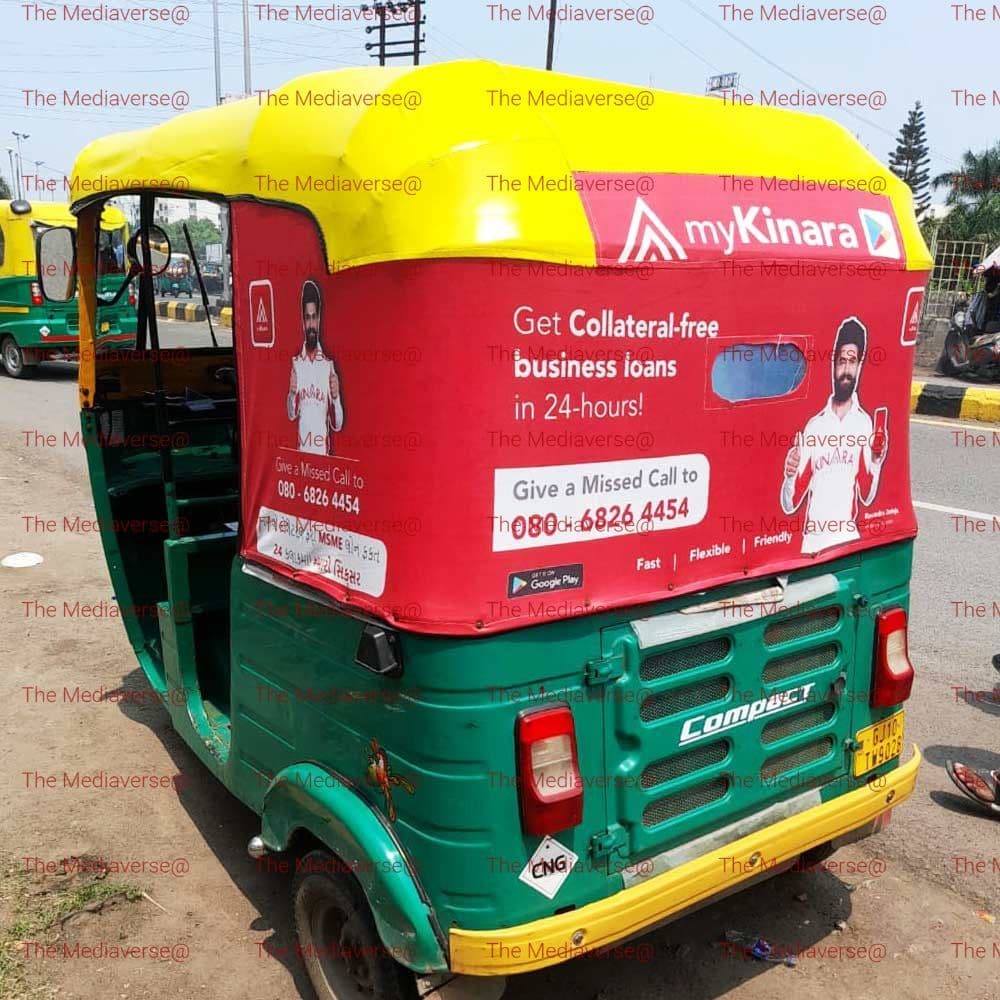
Auto-rickshaw branding in India: the complete 2026 guide to formats, cost, and campaigns
What does auto-rickshaw branding cost, which format should you choose, and how much reach does a fleet deliver? The complete 2026 guide to auto branding in India.
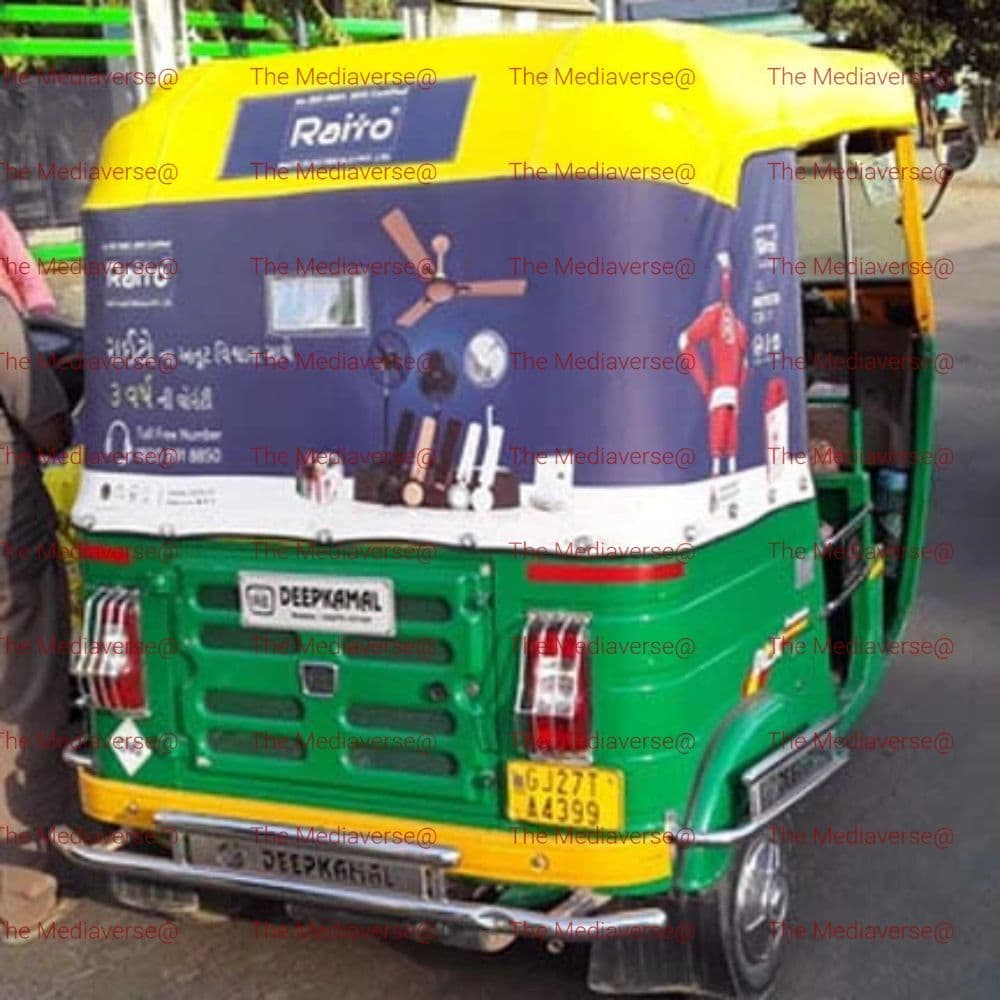
The most underrated outdoor format in India: why auto-rickshaw branding beats its budget
Auto-rickshaw branding is unglamorous, which is exactly why it is underrated. An operator's case for the format that quietly delivers the most local reach per rupee in India.
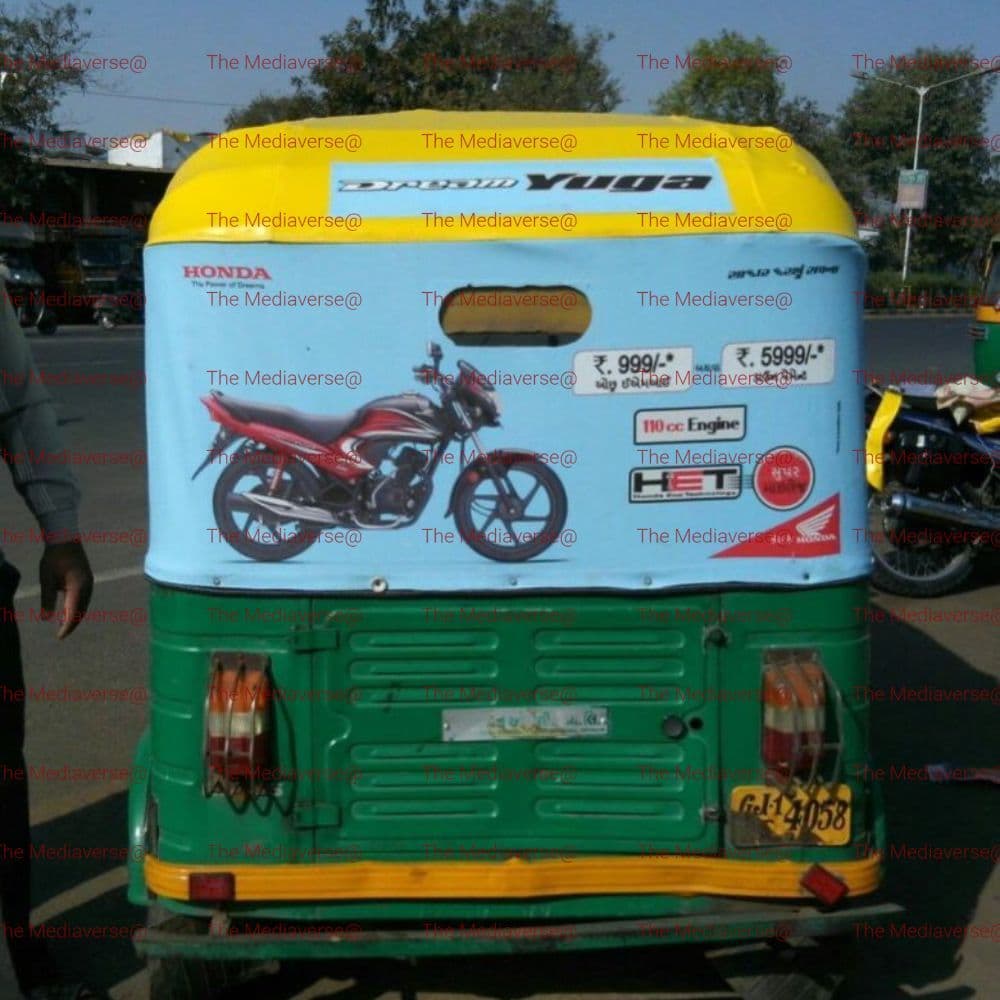
Auto hood branding vs back panel: which auto-rickshaw format should you choose in 2026?
Hood branding or a back panel sticker for your auto-rickshaw campaign? A 2026 decision guide with card rates, a spec table, when each format wins, how to mix them, and a checklist.